Contact Us



Latex Balloon Size Chart: From 5-Inch to 36-Inch — What Wholesale Buyers Need to Know
Latex Balloon Size Chart: From 5-Inch to 36-Inch — What Wholesale Buyers Need to Know
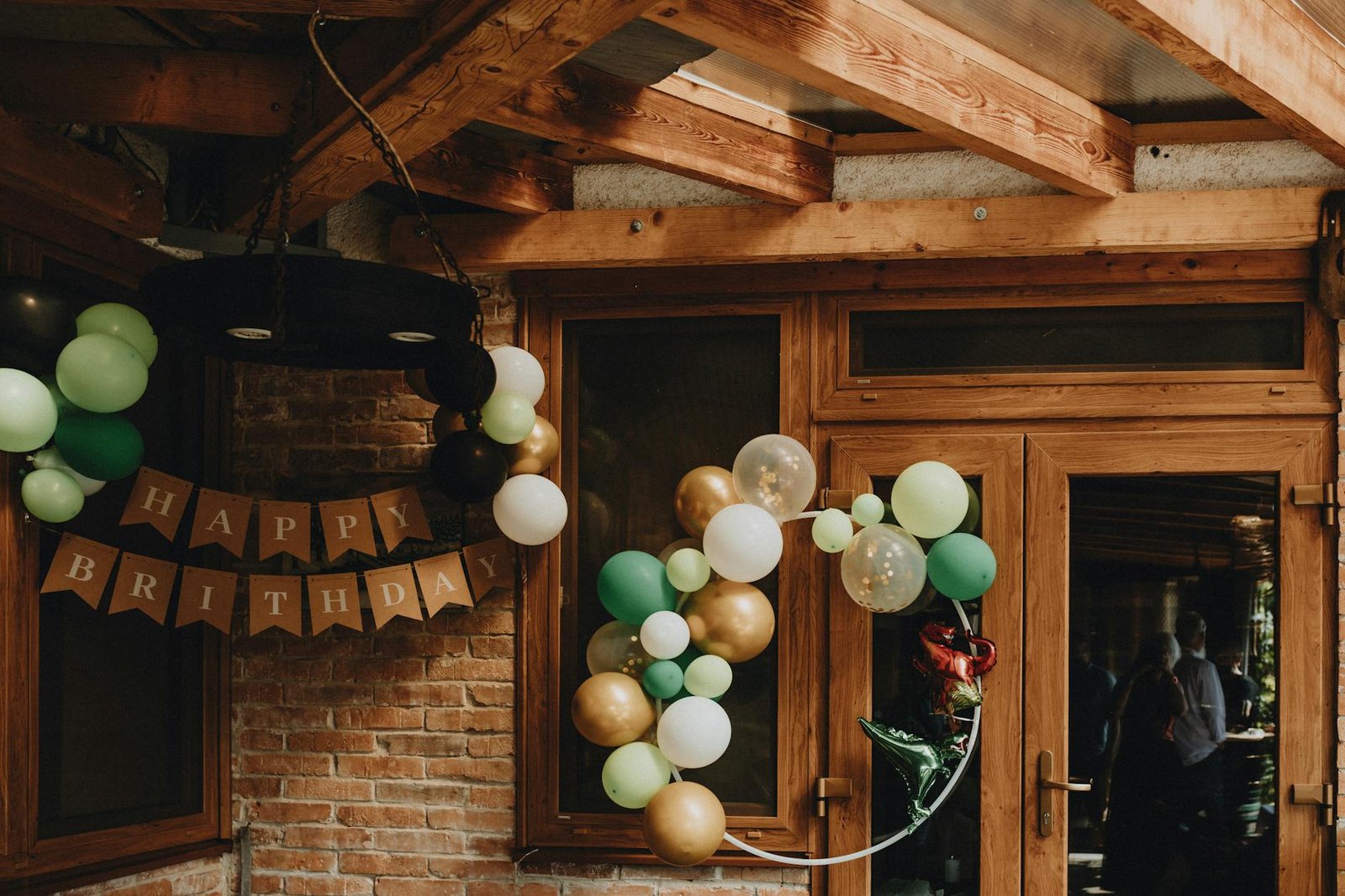
You just got the inquiry for a 15th birthday party. The mood board is full of those gorgeous, organic balloon garlands with a mix of small, medium, and giant balloons. You start your quote, and then you freeze. How many 5-inch balloons do you need to fill those gaps? If you use 36-inch balloons for the statement pieces, how many standard 11-inch ones do you need to surround them to make it look full, not sparse? You know guessing wrong means either eating the cost of extra balloons or, worse, showing up to install with a half-finished look. This exact moment of uncertainty is where your profit margin either solidifies or evaporates. Understanding latex balloon sizes isn’t just about knowing dimensions; it’s the foundational math of your pricing, your material orders, and your client’s satisfaction. I’ve watched hundreds of decorators transition from hobbyists to pros the moment they internalized the real-world application of a latex balloon size chart. Let’s break down exactly what you need to know, from the tiny 5-inch filler to the massive 36-inch showstopper, so you can bid with confidence and build with precision.
Why Latex Balloon Sizes Are Your Secret Pricing Weapon
When I first started sourcing party supplies, I thought a balloon was a balloon. I’d look at a wholesale price list and see 11-inch balloons for $0.15 and 5-inch balloons for $0.08 and think, “Great, the small ones are cheaper.” What I didn’t account for was the volumetric coverage. A client asks for a lush, 8-foot balloon garland. If you build it entirely with 11-inch balloons (inflated to a standard 9 inches), you might need 100 pieces. But if you master the mix of latex balloon sizes—using 5-inch and 9-inch balloons as filler around key 18-inch balloons—you might only need 70 total balloons to achieve the same visual density. That’s a 30% reduction in your material cost on that single item. Now multiply that across every arch, column, and centerpiece in your portfolio. The strategic use of different latex balloon sizes directly dictates your Cost of Goods Sold (COGS). It allows you to create high-perceived-value installations (clients love the texture of mixed sizes) while actually lowering your material expenditure. This is the core knowledge that separates the decorator who struggles to make 20% margin from the one who consistently nets 40-50%.
The Cost-Per-Cubic-Foot Reality of Latex Balloon Sizes
Let’s get mathematical for a second, because this is where the profit hides. A standard 11-inch latex balloon, when properly inflated for decor, reaches about 9 inches in diameter. That gives it a volume of roughly 382 cubic inches. A 5-inch balloon, inflated to about 4.5 inches, has a volume of only 48 cubic inches. So, while the 5-inch balloon might cost half the price, it provides less than one-eighth of the volumetric fill. You need eight 5-inch balloons to fill the same space as one 11-inch balloon, which changes the cost calculation dramatically. When you’re planning a large backdrop, this math is everything. You use the large latex balloon sizes (18-inch, 24-inch, 36-inch) as your structural anchors because their cost-per-cubic-inch is often far better, and then you use the small and medium sizes for color blending and texture. Without this chart in your mind, you’re either over-ordering and wasting money or under-ordering and risking a last-minute panic.
Client Psychology and the Perception of Value
Here’s a truth about your clients: they don’t buy balloons; they buy a feeling, an atmosphere, a wow factor. A monochromatic cluster of identical 11-inch balloons looks commercial, like a car dealership opening. A sophisticated blend of latex balloon sizes—think 5-inch, 9-inch, 12-inch, and 24-inch all in coordinating hues—looks custom, artistic, and high-end. It tells a story of deliberate design. When you present a proposal that specifies the use of multiple latex balloon sizes to create depth and movement, you’re not just listing materials; you’re selling your expertise. This justifies a higher price point. The client sees the detail in your plan and trusts you with their vision. The latex balloon size chart is therefore not just an operational tool; it’s a sales and marketing document that lets you articulate your value in concrete terms.
Decoding the Latex Balloon Size Chart: Inch by Inch
Let’s move from theory to the tangible specifics. A manufacturer’s latex balloon size chart lists the uninflated dimensions, but your world operates in the inflated reality. There’s always a stretch factor. A “12-inch” balloon is rarely inflated to a full 12 inches; doing so puts it under maximum tension, increasing the risk of pops and reducing its float life. The industry standard is to under-inflate by 1-3 inches depending on the size and quality. This practice, called “soft-inflating,” creates a more pear-shaped, elegant profile and is crucial for building sturdy structures. Below is the breakdown you’ll use daily, compiled from working with thousands of decorators and our own factory production lines.
- 5-Inch Latex Balloons: Uninflated: ~5 inches. Inflated Diameter: 4-4.5 inches. These are your primary filler balloons. They’re perfect for clustering in groups of 3-5 to fill gaps in garlands, adding pops of accent color, or creating dense “bubble” effects in centerpieces. Their small size makes them excellent for intricate designs like balloon mosaics or letters.
- 9-Inch & 11-Inch Latex Balloons: The workhorses. A 9-inch balloon inflates to ~7-8 inches. An 11-inch balloon (the global standard) inflates to 9-10 inches. This is your base layer for 90% of arch and garland work. They provide the body and are available in every conceivable color and finish (pastel, metallic, pearl, chrome).
- 12-Inch to 16-Inch Latex Balloons: Uninflated: 12-16 inches. Inflated Diameter: 10-14 inches. These are your feature balloons. They add noticeable variation without dominating. A 16-inch balloon is often the largest size used in standard organic garlands before introducing true “jumbo” elements.
- 18-Inch to 24-Inch Latex Balloons: The statement makers. An 18-inch balloon inflates to about 16 inches; a 24-inch to about 22 inches. They command attention and are used sparingly—often as the focal point in a cluster or at the base of an arch. They require a different grade of latex for consistent inflation and durability.
- 36-Inch Latex Balloons: Uninflated: 36 inches. Inflated Diameter: 32-34 inches. These are specialty items for massive installations. They’re not typically used in flowing garlands but as standalone sculptures, photo op backdrops, or ceiling floaters. They demand a professional air inflator and careful handling.
Understanding Stretch Tolerance and Quality Markers
The number on the chart is a promise of potential size, but the quality of the latex determines if you can safely reach it. Premium latex from high-hevea content can be stretched more reliably to its listed size without thinning to a dangerous point. Lower-quality latex, often chalky and stiff, may only safely inflate to 80% of its listed size before becoming prone to popping. When you’re evaluating wholesale suppliers, ask for the “safe working diameter” for each of their latex balloon sizes. A reputable factory like ours will provide this data because we know decorators build entire events on this precision. For example, our 11-inch premium latex balloons have a tested safe inflation diameter of 9.5 inches, giving you more flexibility than a budget balloon rated for only 8.5 inches.
The Inflation Factor Table: Your Quick-Reference Guide
This is the cheat sheet I keep pinned above my workstation. It translates the listed latex balloon sizes into the real-world dimensions you plan with.
| Listed Size | Standard Inflated Diameter | Best Use Case | Approx. Balloons per 10ft Garland |
|---|---|---|---|
| 5-inch | 4.5″ | Filler, clusters, details | 80-100 (as filler only) |
| 9-inch | 7.5″ | Secondary filler, kids’ parties | 60-80 |
| 11-inch | 9″ | Primary garland/arch body | 40-50 |
| 16-inch | 14″ | Feature balloon in mixes | 15-20 |
| 24-inch | 22″ | Statement focal point | 5-8 |
| 36-inch | 33″ | Standalone sculpture, ceiling drop | 1-3 |
Real-World Math: Translating Sizes into Quantities for Events
Now we apply the chart. A bride sends you a photo of a sweetheart table backdrop: a sprawling organic garland that’s about 12 feet wide and 6 feet tall at its peak. Your job is to turn that inspiration into a shopping list and a labor quote. This is where most new decorators either overbuy and kill their profit or underbuy and face a crisis. Let’s walk through the calculation for a project like this. First, assess the composition in the photo. I see a mix: perhaps 60% standard 11-inch balloons, 20% 5-inch filler balloons, 15% 16-inch feature balloons, and 5% 24-inch statement balloons. For a 12-foot garland of medium density, you’ll need a total balloon count in the range of 150-200 pieces. So, you start with the core: 60% of 175 balloons is 105 balloons. That’s your 11-inch base. Then 20% for filler: 35 balloons in the 5-inch size. Feature balloons (16-inch): 26 balloons. Statement balloons (24-inch): 9 balloons.
Quantity Formula for Common Installations
After doing this for years, I’ve developed rough formulas that work as a starting point. Remember, client taste varies—some want it bursting full, others prefer a more airy, modern look.
- Standard Arch (10ft long, 3ft thick): 120-150 total balloons. Mix: 70% 11-inch, 20% 16-inch, 10% 5-inch filler.
- Organic Garland (per linear foot): 12-18 balloons per foot. A 15-foot garland needs 180-270 balloons. Mix is highly variable, but a safe starter is 50% 11-inch, 30% 5-inch & 9-inch, 15% 16-inch, 5% 24-inch.
- Balloon Column (6ft tall, 2ft diameter): 80-100 balloons. Mix: 60% 11-inch, 25% 16-inch, 15% 5-inch.
- Ceiling Installation (per 10×10 ft area): 50-70 balloons, using a mix of 11-inch and 16-inch for visual weight.
These numbers assume you are using a quality latex that inflates well. Cheap latex often looks deflated and requires more balloons to achieve the same fullness, ironically making it more expensive in the long run.
Accounting for Overage and the “Oh No” Factor
Never, ever order the exact number from your calculation. You must build in overage. Balloons pop during inflation, during transport, and during installation. Colors might be slightly off, forcing you to adjust your mix on the fly. My rule is a 15-20% overage on the total count, with a higher percentage (25%) on the smallest and largest latex balloon sizes. The 5-inch balloons are handled more during clustering and are prone to pops. The 36-inch balloons are under immense pressure. That extra bag of 5-inch white or the two extra 24-inch metallics are your insurance policy against a stressful setup day. Factor this overage cost into your initial quote as a standard line item for “materials & contingency.” It makes you look professional and covers your backside.
Material & Quality Deep Dive: Not All Latex is Created Equal
You can have the perfect plan for your latex balloon sizes, but if the material fails, the entire installation fails. The latex itself is a natural product, and its processing determines everything: elasticity, shine, opacity, and longevity. There are three primary tiers you’ll encounter when sourcing wholesale latex balloon sizes. The first is economy-grade latex. This is often made with a lower percentage of pure hevea latex and more fillers and additives. It feels chalky to the touch, has a dull finish, and has inconsistent wall thickness. When you inflate it, you might see thin spots or a mottled color. It might only hold its size for 8-12 hours before oxidation makes it look tired. The second tier is standard commercial grade. This is what most reputable wholesalers supply. It has a good shine, consistent color, and a reliable 18-24 hour lifespan for event decor. It’s your dependable workhorse.
The third tier is premium or decorator-grade latex. This is what we specialize in at VastParty for our professional clients. It uses a higher concentration of pure latex, is processed for maximum elasticity (allowing for that safe, larger inflation diameter), and includes UV inhibitors and anti-oxidants. The difference is visible and tangible. The balloon has a deep, glossy or pearlized finish, feels supple, and can maintain its shape and shine for 48-72 hours. This is critical for multi-day events or installations that need to be set up a day in advance. When you’re working with larger latex balloon sizes like 24-inch and 36-inch, this grade is non-negotiable. The stress on the material is too great for inferior latex to handle reliably.
The Certification and Safety Checkpoint
This is a point many first-time importers miss. Latex balloons are playthings, but when you’re buying them by the thousands for commercial use, you need to ensure they meet safety standards. For markets like the US, EU, and Australia, this means checking for certifications like CE, ASTM D-4236 (non-toxic art material), and Proposition 65 compliance. These certifications ensure the balloons are free from harmful levels of nitrosamines and heavy metals. They’re not just bureaucratic checkboxes; they’re your liability shield. If a child at an event you decorated puts a balloon piece in their mouth, you need to know the material is safe. Always ask your supplier for test reports for the specific latex balloon sizes you’re ordering. A professional factory will have these on file and provide them willingly.
Float Life vs. Event Life: What Really Matters
Manufacturers talk about “float life” — how long a helium-filled balloon will stay afloat. For decorators, “event life” is far more important. This is how long an air-filled balloon, often under tension in an arch, will look fresh, shiny, and full. Event life is influenced by latex quality, inflation level, and environmental factors (sunlight, heat, humidity). A premium 11-inch balloon, soft-inflated to 9 inches and kept indoors, can have an event life of 3 days. The same balloon, over-inflated and placed in direct sun, might look wilted in 6 hours. When planning, you must match the latex balloon sizes and their quality tier to the event conditions. An outdoor summer wedding demands the highest grade across all latex balloon sizes, especially the larger ones which are more susceptible to heat expansion and subsequent popping.
The Wholesale Advantage: Sourcing the Right Latex Balloon Sizes for Profit
Buying retail bags of balloons for event work is a fast track to bankruptcy. The wholesale pivot is your first major step toward profitability. But wholesale isn’t a monolith. There are traders, distributors, and factories. For the deepest control over cost, quality, and assortment, sourcing directly from a manufacturer like us in Yiwu, China, is the goal. The price differential is staggering. A retail bag of 72 assorted 11-inch latex balloons might cost $15 ($0.21 per balloon). A wholesale case of 500 of the same size from a US distributor might be $80 ($0.16 per balloon). Ordering a 10,000-piece mixed carton of various latex balloon sizes directly from the factory can bring your cost down to $0.09-$0.12 per balloon, depending on the size and finish. That’s a 50-70% reduction in your single largest material cost.
Navigating Minimum Order Quantities (MOQs)
This is the hurdle that intimidates new buyers. Factories have MOQs to make production runs efficient. A common MOQ for a single color and size might be 5,000 pieces. For a decorator just starting, that’s a lifetime supply of, say, 5-inch blush pink. This is where a flexible supplier becomes a partner. At VastParty, we structure our MOQs by carton, not by single SKU. You can mix different latex balloon sizes and colors within one carton to reach the minimum volume. For example, a 20kg carton can hold 2,000 11-inch balloons, or 8,000 5-inch balloons, or a mix like 500 24-inch, 1,000 11-inch, and 3,000 5-inch balloons. This allows you to build a starter inventory that reflects the real-world ratios you need without being stuck with 10,000 units of one item.
Price Tiers and Volume Breaks
Understanding the pricing ladder is key to planning your growth. Here’s a typical breakdown based on factory-direct pricing for standard 11-inch latex:
- Tier 1 (Sample/Small Order): 500 – 2,000 pcs: ~$0.13 – $0.15 per balloon
- Tier 2 (Growing Business): 2,001 – 10,000 pcs: ~$0.11 – $0.13 per balloon
- Tier 3 (Professional Volume): 10,001 – 50,000 pcs: ~$0.095 – $0.11 per balloon
- Tier 4 (Reseller/High-Volume): 50,000+ pcs: ~$0.08 – $0.095 per balloon
Notice that the biggest drop happens between retail and your first small wholesale order (Tier 1). The jumps between higher tiers offer incremental savings. This means you don’t need to buy a shipping container upfront to get a good deal. Your first pallet or mixed carton order immediately positions you with a competitive cost advantage over anyone buying from craft stores.
Lead Times and Logistics Planning
You can’t decide on Tuesday that you need 5,000 18-inch metallic gold balloons for a Saturday wedding. Sourcing from China requires planning. The standard timeline is: 7-10 days for production after order confirmation and payment, 3-5 days for domestic transport to the port, 20-30 days for ocean shipping to a US port like LA or Long Beach, then 5-7 days for customs clearance and trucking to your door. That’s a 35-50 day total timeline. For urgent needs, air freight is an option but can triple the shipping cost. The smart strategy is to forecast your needs for the upcoming season. In January, plan and order your spring pastel latex balloon sizes. In July, order your fall metallics and holiday colors. This turns your inventory from a reactive expense into a strategic asset.
Application Mastery: Pairing Sizes with Event Types and Trends
The latex balloon size chart is your palette, and different events are your canvases. Using the same size mix for a corporate logo recreation as you would for a baby shower garland is a missed opportunity. Let’s match the tool to the task. For elegant weddings, the trend is towards organic, asymmetrical designs with a sophisticated color palette. Here, your mastery of mixed latex balloon sizes shines. You’ll lean heavily on 11-inch and 16-inch balloons as your structural base, using 5-inch and 9-inch balloons in the same color family (but slightly different shades or finishes) to create subtle texture. The 24-inch balloon is used very sparingly, perhaps one or two in a muted champagne or dusty blue as a focal point. The goal is flow and elegance, not cartoonish bounce.
Corporate and trade show events are different. They often demand bold, brand-aligned colors and geometric precision. Here, latex balloon sizes are used more uniformly. You might build a massive logo wall using only 11-inch balloons for pixel-like consistency, or create sleek columns using a single size like 16-inch balloons for a modern, clean look. The 36-inch latex balloon size comes into play here as a branded “moon” or planet in space-themed events. For kids’ birthdays and sweet sixteens, it’s all about fun, energy, and often, character themes. You’ll use the full spectrum of latex balloon sizes wildly—clusters of 5-inch balloons in bright colors, 11-inch balloons as the main body, and giant 36-inch number or letter balloons as the centerpiece photo prop. The mix is more eclectic and dense.
The Rise of the “Mini” and “Micro” Trend
Look at any high-end event design blog right now, and you’ll see a trend towards delicate details. This has pushed 5-inch and even smaller 3-inch latex balloon sizes into the spotlight. They’re being used to create “balloon fringe” on table runners, tiny clusters hanging from clear fishing line to simulate floating bubbles, or intricate patterns on ceremony backdrops. This trend is fantastic for wholesale buyers because these smaller latex balloon sizes are incredibly cost-effective per unit and allow for high-margin design upgrades. Offering “deluxe detailing with micro-balloon clusters” can add $50-$100 to a table decor package for just a few dollars in material cost.
Seasonal Shifts in Size Demand
Your inventory should breathe with the calendar. In Q4 (October-December), demand for larger latex balloon sizes spikes. Think 24-inch and 36-inch pumpkins, ghosts, and snowballs for Halloween and Christmas installations. The spring wedding season (Q2) sees high demand for the full range of pastel 11-inch, 16-inch, and 5-inch balloons. Summer months (Q3) for birthdays and corporate picnics drive sales of standard 11-inch and 9-inch balloons in primary colors. By anticipating these shifts, you can negotiate better prices with your supplier by ordering in the off-season for the upcoming peak, and you never miss a sale because you’re out of the right size.
Inventory Strategy: Which Latex Balloon Sizes to Stock for Maximum ROI
Cash tied up in slow-moving inventory is dead money. Your goal is to turn your balloon stock quickly. Based on aggregate sales data from our wholesale clients, here is the Pareto Principle (80/20 rule) applied to latex balloon sizes. Roughly 80% of your usage will come from 20% of the sizes. For nearly every event decorator, that critical 20% consists of: 11-inch rounds (in white, black, and 3-4 trending colors), 5-inch rounds16-inch rounds (in metallics like gold, silver, and rose gold). These three latex balloon sizes form the absolute core of your working inventory. You should always have a healthy stock of these, replenished frequently.
The next tier, which you stock in moderate quantities, includes 9-inch rounds (great for kids’ parties and as a mid-size filler), 12-inch rounds, and 18-inch rounds. The final tier, which you either stock minimally or order on a project-by-project basis, includes the specialty 24-inch, 36-inch, and unique shapes (hearts, stars) in specific latex balloon sizes. For these, it’s often more cost-effective to add them to a scheduled production order with a 3-4 week lead time rather than letting them gather dust in your warehouse. Your color strategy follows the same logic. 50% of your stock should be in neutrals and classics (white, black, clear, gold, silver). 30% in the current season’s trending palette (e.g., sage green and terracotta in fall). 20% in assorted accent colors.
The “Fast-Mover” Checklist for Initial Wholesale Order
If you’re placing your first mixed carton order and want to cover 90% of common requests, here’s a sample mix targeting 5,000 total balloons:
- 11-inch Latex: 2,000 balloons. (White: 800, Black: 400, Gold Metallic: 400, Blush: 200, Navy: 200).
- 5-inch Latex: 2,500 balloons. (White: 1,000, Clear: 500, Gold Metallic: 500, Blush: 250, Navy: 250).
- 16-inch Latex: 400 balloons. (Gold Metallic: 150, Silver Metallic: 150, Rose Gold: 100).
- 9-inch Latex: 100 balloons (assorted bright colors for kids’ parties).
This mix gives you immense flexibility to create monochromatic looks, metallic accents, and popular two-color schemes immediately, while keeping your per-balloon cost low.
Storage and Shelf-Life Management
Latex degrades over time, especially when exposed to heat, light, and oxygen. Proper storage is part of your quality control. Keep balloons in their original plastic bags inside closed cardboard boxes, in a cool, dark, dry place. A garage that gets hot in summer is a terrible location. Label every box clearly with the size, color, and date of purchase. Implement a “first in, first out” (FIFO) system. Use the older stock first. The general shelf life for quality latex balloons stored properly is 2-3 years. If balloons become sticky, overly tacky, or difficult to inflate, they’re past their prime. A disciplined inventory system prevents waste and ensures every balloon you install looks its best.
Beyond the Basics: Advanced Techniques with Mixed Latex Balloon Sizes
Once you’re comfortable building a standard garland, it’s time to elevate your craft. This is where manipulating latex balloon sizes becomes an art form. One advanced technique is “double-stuffing” or “balloon-in-balloon.” This involves inflating a smaller, often contrasting-colored balloon (like a 5-inch), placing it inside a larger clear balloon (like a 16-inch or 24-inch), and then inflating the outer balloon. The result is a mesmerizing, layered look that adds incredible depth. This technique works best with a significant size differential between the inner and outer latex balloon sizes to avoid premature popping. Another pro technique is creating “balloon chains” or “rattle tails” for installations. This involves linking 5-inch or 9-inch balloons together with monofilament line and attaching them in cascading clusters from the main body of an arch or ceiling piece. It creates movement and fills vertical space beautifully.
For large-scale installs, understanding structural engineering with latex balloon sizes is crucial. A freestanding arch over 12 feet wide needs a hidden framework, but the balloon sizes on that framework create the illusion. The largest latex balloon sizes (24-inch, 36-inch) should be placed at the base and the peak—the points of greatest visual weight and structural stress. The medium sizes (16-inch) fill the mid-section, and the small sizes (5-inch, 9-inch) are used to blend and hide the mechanics. When creating a balloon wall, professionals often build it in modular panels (4ft x 4ft) off-site. Each panel uses a tightly packed mix of latex balloon sizes for texture, but is designed to interlock seamlessly with the next panel, allowing for rapid installation of a massive backdrop in a venue with limited setup time.
Calculating Helium Needs for Mixed Sizes
When your design includes helium-filled elements amidst your air-filled arch, the math changes. Different latex balloon sizes have different lift capacities and float durations. A standard 11-inch latex balloon filled with helium will float for 12-18 hours. A 36-inch balloon might only float for 3-4 days due to its weight. You must calculate your helium tank rental (usually in cubic feet) based on the sizes and quantities. A rough guide: one standard 14.9 cu ft helium tank fills about 50 11-inch latex balloons, or 15 24-inch balloons, or just 4-5 36-inch balloons. Mixing sizes means you need to do a blended calculation. Always order 10-15% more helium than your math says; you’ll waste some during filling, and some balloons will be duds. Nothing kills a floating centerpiece faster than a balloon that hits the floor two hours into the reception.
What the Pros Know: The secret to a perfectly tight cluster isn’t just the knot. It’s using a slight variation in inflation levels within the same latex balloon size. For a cluster of four 11-inch balloons, inflate one to 9.5 inches, two to 9 inches, and one to 8.5 inches. When tied together, they nest into each other creating a perfectly round, seamless orb instead of four separate spheres fighting for space. This tiny trick elevates the professionalism of your work instantly.
Frequently Asked Questions About Latex Balloon Sizes
Q: What is the most versatile latex balloon size I should buy first?
A: Without a doubt, the 11-inch round latex balloon. It’s the industry standard for a reason. It’s the perfect balance of size, cost, and visual impact. You can use it as the sole component for simple designs, or as the foundational body in complex mixes. Stock up on 11-inch balloons in neutral colors (white, black, clear) and a few key metallics first. This one size will let you tackle a huge variety of basic arches, garlands, and columns while you build out your inventory of other latex balloon sizes.
Q: How many 5-inch balloons equal one 11-inch balloon in terms of coverage?
A> It’s not a 1:1 swap—it’s about volume. One 11-inch balloon inflated to 9 inches fills approximately 382 cubic inches of space. One 5-inch balloon inflated to 4.5 inches fills about 48 cubic inches. So, you’d need roughly eight 5-inch balloons to fill the same physical space as one 11-inch balloon. However, in design, you rarely use them for pure volumetric fill; you use clusters of 3-5 small balloons to create texture and fill specific gaps between the larger pieces in your design.
Q: Can I inflate a 12-inch balloon to a full 12 inches?
A> Technically, you can, but you shouldn’t for decor purposes. Inflating a latex balloon to its maximum listed size puts the material under extreme tension, making it more likely to pop during handling or from minor temperature changes. It also gives the balloon a tight, spherical, “hard” look that is less elegant. The professional standard is to “soft-inflate,” aiming for 1-2 inches less than the listed size. So, inflate a 12-inch balloon to about 10-11 inches. This creates a more pear-shaped, durable, and professional-looking balloon.
Q: What’s the biggest difference between cheap and premium latex balloons?
A> The differences are profound. Cheap latex is often thin, has inconsistent color and wall thickness, a chalky or dull finish, and a short event life (may oxidize and look dull within hours). Premium latex, like what we produce at VastParty, is thicker and more elastic (allowing for safer, larger inflation), has a vibrant, consistent gloss or pearl finish, and contains additives that fight oxidation for 2-3 days. For large latex balloon sizes or important events, the premium grade is non-negotiable—it’s the difference between an installation that wows and one that worries you.
Q: How do I figure out how many balloons I need for a custom backdrop size?
A> Use the “balloons per square foot” estimation method. For a dense, classic look, plan for 2-3 balloons per square foot of backdrop surface area. For a more modern, airy look, 1-1.5 balloons per square foot. First, calculate your backdrop’s approximate area (height x width). For a 8ft x 12ft backdrop, that’s 96 square feet. For a dense look (2.5 balloons/sq ft), you’d need about 240 total balloons. Then, apply your size mix ratio (e.g., 50% 11-inch = 120 balloons, 30% 5-inch = 72 balloons, 20% 16-inch = 48 balloons). Always add 15-20% as overage.
Q: Is it worth stocking 36-inch latex balloons, or should I order them per event?
A> For most decorators, order them per event unless you specialize in large-scale theatrical work or have very frequent demand. Their high unit cost, significant storage space requirement, and specialized handling (they need a powerful inflator) make them a specialty item. When you get a client request, factor the lead time (4-6 weeks from factory order) into your proposal timeline. The profit margin on a single 36-inch balloon used in a custom installation is excellent, so it’s a great item to offer, but it doesn’t need to be part of your core rotating stock.