Contact Us

Custom Printed Latex Balloons: Minimum Order Quantities, Lead Times, and Pricing from Yiwu Suppliers
Custom Printed Latex Balloons: Minimum Order Quantities, Lead Times, and Pricing from Yiwu Suppliers
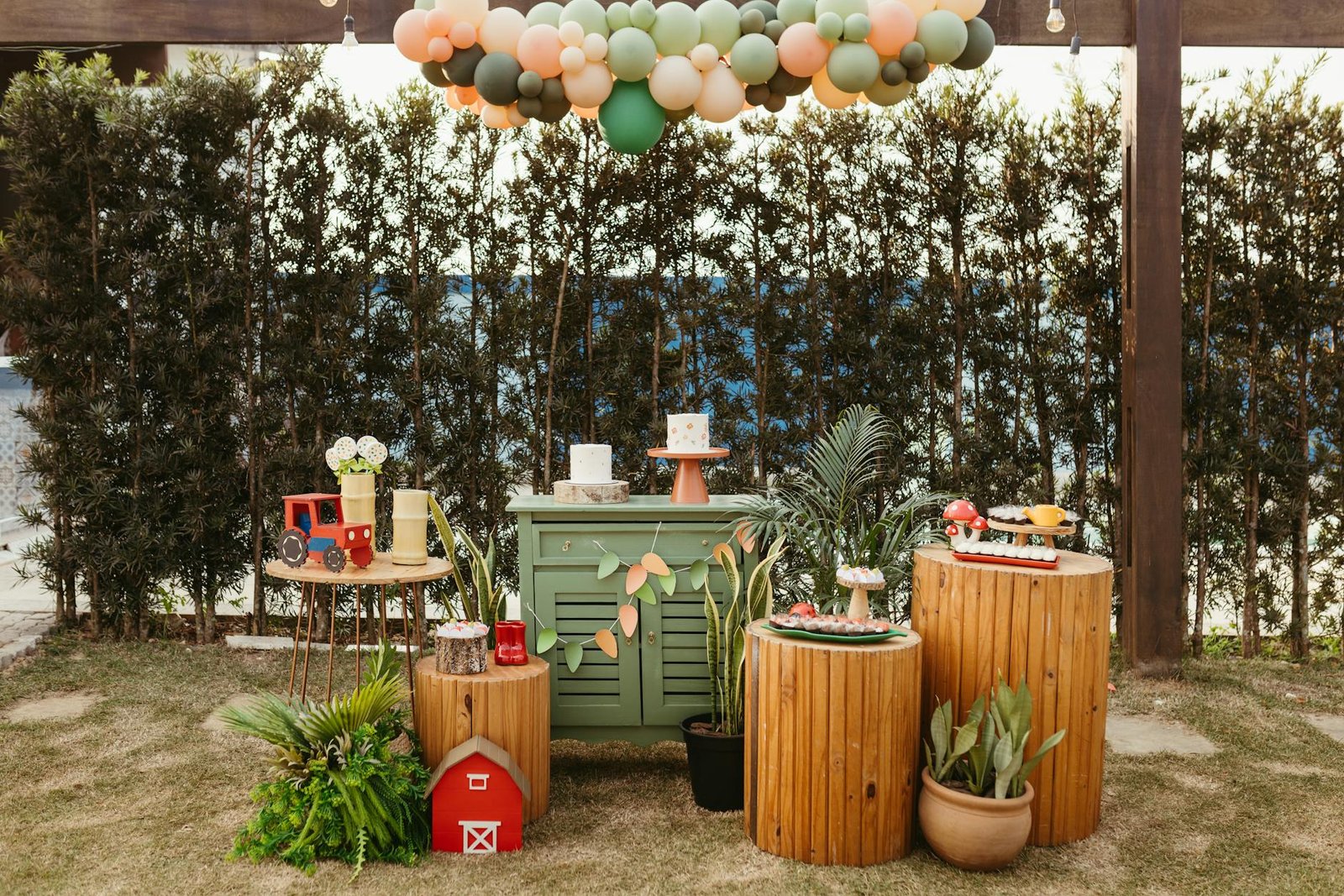
You just got the email from a corporate client or a wedding planner you’ve been trying to land for months. They love your portfolio, but they have one specific request: they need branded decor for their 200-person event in six weeks. The centerpiece of their vision is a stunning balloon installation featuring their logo. Your mind races—you know generic balloons won’t cut it, but you’ve never sourced custom printed latex balloons before. The clock is ticking, and you’re staring at a blank supplier inquiry form, wondering if you need to order 500 pieces or 5,000, what the real timeline is, and how much of your profit margin this will eat. This exact moment of uncertainty is where most decorators either secure a loyal, high-value client or lose the job to a competitor who already has the sourcing figured out. I’ve been in that exact spot, and after years of navigating the wholesale landscape from Yiwu, China, I can tell you the process is far more straightforward and accessible than most think, provided you know the right questions to ask and the realistic numbers to expect.
What Makes Custom Printed Latex Balloons Different
The shift from generic party decor to personalized brand experiences is the single biggest trend I’ve seen in the last three years. It’s not just about having balloons; it’s about having balloons that tell a story, reinforce a brand, or commemorate a specific date. What truly sets custom printed latex balloons apart is the shift from a commodity product to a marketing asset. A standard latex balloon is a consumable—it pops, it deflates, its value ends with the event. A custom printed balloon, however, carries a logo, a hashtag, or a message that gets photographed, shared on social media, and often taken home as a keepsake. This transforms your balloon from a decoration into a durable piece of brand collateral. The innovation isn’t just in the printing—which has moved from clunky, expensive silk-screening to high-resolution, digitally-friendly offset and flexographic printing—but in the entire supply chain. Factories now offer smaller, more accessible minimum order quantities (MOQs) and faster turnarounds because the demand from small businesses, not just massive corporations, has fundamentally changed the market.
The Core Innovation in Custom Balloon Printing
The real game-changer has been the adoption of more precise and vibrant printing techniques that work on the curved, stretchable surface of a latex balloon. Older methods often resulted in cracked, faded logos after inflation. Modern printing for custom printed latex balloons uses specialized inks that bond with the latex during the manufacturing process, allowing the graphic to stretch and contract with the balloon without distortion. This means a client’s intricate logo or detailed font remains crisp whether the balloon is under-inflated for a soft look or fully inflated for maximum impact. The color palette has also expanded dramatically, moving beyond basic CMYK to include Pantone-matching capabilities, metallic inks, and even glow-in-the-dark options. This technical leap means decorators are no longer limited to simple, one-color designs; you can now replicate complex brand assets with a high degree of fidelity, which is exactly what corporate and high-end wedding clients demand.
From Decoration to Marketing Tool
This transformation in function is what you’re really selling. When you pitch a client on custom printed latex balloons, you’re not just talking about decor costs. You’re talking about marketing ROI. A balloon with a company logo or event hashtag placed in a central installation becomes a photo-op magnet. Every guest who takes a picture with that balloon arch is essentially creating free, organic advertising for your client’s brand or event. I’ve seen events where the custom balloons generated more social media impressions than the paid digital ad campaign. For event planners and decorators, this means you can position your service as adding strategic value, not just aesthetic value. You’re providing a tool for audience engagement and brand amplification, which justifies a higher price point and makes you an indispensable partner, not just a vendor. This shift allows you to move out of the competitive, price-sensitive world of generic decor and into a niche where clients value expertise and results.
Technical Specifications Deep Dive
Ordering custom printed latex balloons without understanding the technical specs is like buying a car without checking the engine. The details determine quality, durability, and client satisfaction. Let’s break down the critical specifications you must confirm with any supplier. First, balloon size is not as simple as “11-inch.” You need the flat, uninflated dimensions and the expected inflated diameter. Industry standard for printing is typically the 11-inch (28cm) round balloon, which when properly inflated reaches about 9-10 inches in diameter. The latex thickness, measured in grams, is crucial. Standard quality runs about 1.8 to 2.2 grams per balloon. Thinner latex (below 1.8g) is more prone to popping and has poorer print adhesion, while thicker latex (up to 3.0g) offers superior durability and a richer, more opaque color for printing, but at a higher cost. The valve type is another silent differentiator. A self-sealing valve (often called a “duckbill” or “auto-tie” valve) is non-negotiable for professional use—it allows for quick inflation with helium or air and seals automatically, saving enormous time and labor compared to hand-tying hundreds of balloons.
Printing Methods and Color Fidelity
Not all printing is created equal, and the method used directly impacts your cost and the final look. For custom printed latex balloons, the two primary methods are offset printing and flexographic printing. Offset printing is superior for complex, multi-color designs, photographic images, and gradient effects. It uses a series of plates and offers excellent color accuracy and fine detail. However, it typically has a higher setup cost and a higher MOQ, often starting at 5,000 pieces per design. Flexographic printing uses flexible relief plates and is more cost-effective for simpler designs with fewer colors (think 1-3 spot colors). It’s faster and cheaper to set up, making it ideal for orders of 1,000 to 3,000 pieces. The key question for your supplier is their color matching process. Can they match a Pantone (PMS) color? Do they provide a digital proof, a physical print proof, or a sample balloon before full production? Never approve a design based on a JPEG on a computer screen; colors on latex look different than on a monitor.
Material Certifications and Compliance
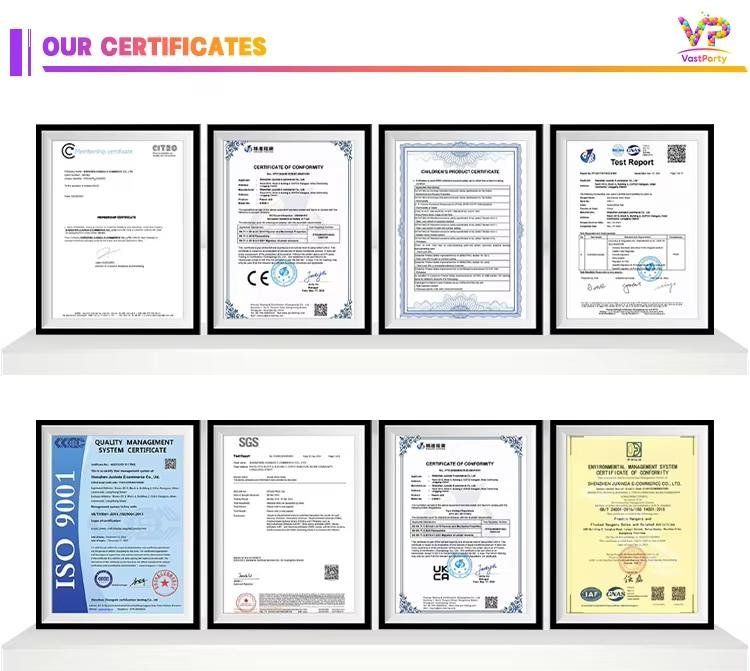
This is the boring but absolutely critical part that protects your business. When sourcing custom printed latex balloons, especially from overseas, you must verify material compliance. The latex should be natural rubber latex, and the factory should be able to provide test reports showing it meets relevant safety standards. For the US market, this includes ASTM F-963 (Standard Consumer Safety Specification for Toy Safety) and CPSIA (Consumer Product Safety Improvement Act) compliance, which limits phthalates and heavy metals. For the European market, you need EN-71 certification and REACH compliance. These aren’t just paperwork exercises—they are your liability shield. If a child has an allergic reaction or a balloon fails and causes an issue, you need to prove you sourced from a responsible manufacturer. A reputable supplier in Yiwu will have these certifications readily available. Don’t work with anyone who hesitates or says it’s not necessary. Furthermore, inquire about the ink certification. The printing inks should be non-toxic and compliant with the same toy safety standards. This due diligence is what separates professional wholesalers from risky discount suppliers.
Real-World Application Scenarios
Understanding where and how custom printed latex balloons are used will help you estimate quantities, design effectively, and pitch clients with confidence. The applications go far beyond the “logo on a stick” concept. For corporate events like product launches, galas, and conferences, the primary use is brand immersion. Think about entrance arches where every balloon features the company logo, creating a powerful first impression. Ceiling installations or “cloud” displays with branded balloons can turn an empty hotel ballroom into a cohesive branded environment. For these events, balloons are often part of a larger kit including backdrop covers and tableware, all in brand colors. Wedding and social event usage is more nuanced. Here, custom printed latex balloons often feature the couple’s names, wedding date, a monogram, or a romantic phrase. They are integrated into ceremony backdrops, sweetheart table arrangements, or even released during the send-off. The trend for “instagrammable” moments has made balloon walls with a custom hashtag or the newlyweds’ names incredibly popular, as they become a dedicated photo station that encourages guest sharing.
Quantities for Different Event Scales
Let’s get specific with numbers, because “a bunch of balloons” isn’t a purchase order. For a standard 10-foot wide by 8-foot tall balloon arch, you’ll need approximately 120-150 balloons if using 11-inch rounds. If every balloon is to be custom printed, that’s your base quantity for that single structure. For a corporate gala with 20 round tables, each needing a centerpiece cluster of 5-7 balloons, you’re looking at 100-140 balloons just for tables. Add in an entrance piece and some accent clusters, and a mid-sized corporate event can easily consume 300-500 custom printed latex balloons. A large wedding with a major installation might use 800+. This is why understanding MOQs is vital—you need to know if you can order the exact quantity for your event, or if you must meet a higher factory minimum and plan to use the excess for future jobs or retail sales. For smaller clients, like a baby shower or a small business anniversary, a focal wall with 50-75 custom balloons can make a huge impact without a massive quantity requirement.
Integration with Other Decor Elements
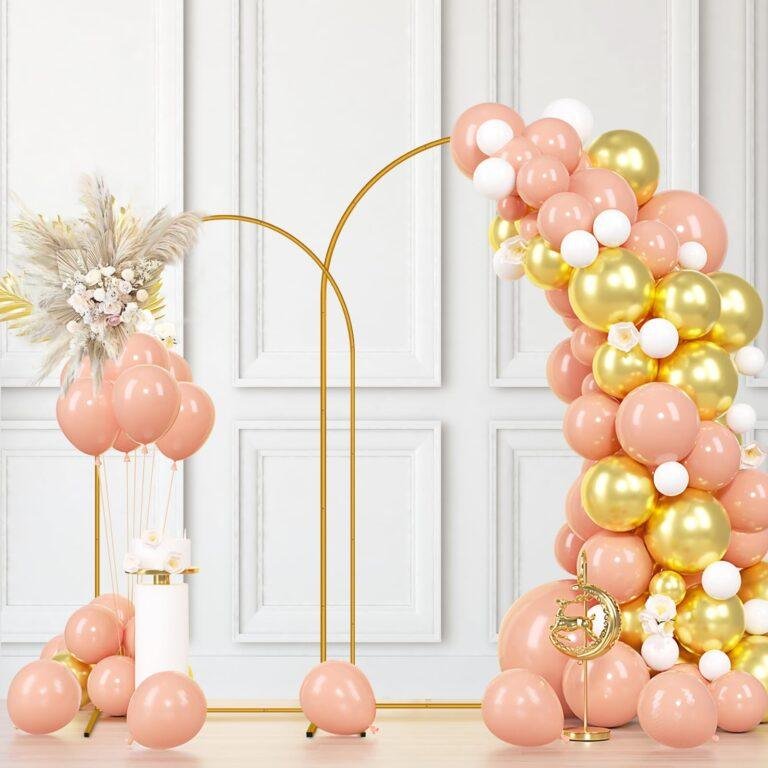
The magic happens when custom printed latex balloons are not an afterthought but are integrated into a holistic design. They work in concert with other products we supply, like balloon garland kits and arch stands. For example, a balloon garland kit provides the tape, glue dots, and sometimes the frame, but the custom balloons become the “feature” balloons spaced throughout a garland of solid-color filler balloons. This is a cost-effective strategy: you don’t need to custom print every single balloon. Instead, you order 50-100 custom pieces with the key logo or message and combine them with 300-400 standard colored balloons from your inventory. This dramatically reduces the custom order cost while maximizing visual impact. Another pro tip is to use custom printed balloons as the “top layer” or focal point on an arch stand, with solid colors forming the structure behind. This layered approach gives depth and makes the custom element pop, both literally and figuratively. Always design the custom component to be the hero, supported by a cost-effective base of standard inventory.
Comparison: Custom Printed vs. Traditional Balloons
To make smart business decisions, you need a clear, side-by-side comparison of what you’re getting into. Sourcing custom printed latex balloons is a different beast than buying standard colors off the shelf. The table below breaks down the key differences across critical business dimensions.
| Factor | Custom Printed Latex Balloons | Traditional Solid-Color Balloons |
|---|---|---|
| Minimum Order Quantity (MOQ) | Typically 500-1,000 pieces per design/color. | As low as 100 bags (often 100 pcs/bag) for mixed colors. |
| Unit Cost (Wholesale) | $0.18 – $0.45 per piece, depending on quantity, colors, and complexity. | $0.08 – $0.20 per piece for standard colors in bulk. |
| Lead Time | 15-30 days for production, plus shipping (20-35 days sea freight). | Often in stock; 7-10 days for shipping if ordering standard catalog items. |
| Setup/Cost | One-time plate/mold fee: $100 – $300+. | No setup cost. |
| Flexibility | Zero flexibility after production starts. Design is locked in. | Can mix and match colors on the fly for any event. |
| Client Value & Pricing Power | Very High. Unique product allows for premium pricing (3-5x cost). | Low. Commoditized, high competition on price. |
| Inventory Risk | High. You are committed to a specific design. | Low. Standard colors can be used across countless events. |
The trade-off is clear: custom printing requires more capital, more advanced planning, and carries more risk, but it unlocks significantly higher profit margins and client loyalty. Traditional balloons are your reliable, low-margin workhorses. The smart business model uses both. You stock a core inventory of high-moving standard colors (like white, black, gold, blush) for the bulk of your installations. Then, you layer in custom printed latex balloons as the premium upgrade for clients who need branding or personalization. This hybrid approach manages cash flow and inventory risk while allowing you to capture high-value orders. The setup cost for custom work, while a barrier, is actually a competitive moat—once you’ve paid for a client’s logo plate, you become the most cost-effective source for their reorders, locking in a long-term relationship.
Why This Trend Is Exploding
The demand for custom printed latex balloons isn’t a fluke; it’s driven by concrete, measurable shifts in consumer behavior and the event industry’s economics. The primary engine is the social media economy. Events are no longer just live experiences; they are content generation platforms. Clients, especially in the corporate and wedding sectors, now budget for “instagrammable moments” with a clear expectation of a social media return. A custom balloon wall with a logo or hashtag is a guaranteed photo backdrop that generates user-generated content. This measurable marketing outcome justifies budgets that would have been unthinkable for “just balloons” five years ago. Secondly, the rise of personalization across all consumer goods has raised expectations. People can customize their sneakers, phone cases, and cars—they now expect to customize their event decor. This “bespoke everything” culture means clients are seeking unique, ownable elements that reflect their specific brand or personality, moving away from one-size-fits-all party store offerings.
The Data Behind the Growth
From our vantage point as a supplier in Yiwu, the data is unmistakable. Five years ago, inquiries for custom printed latex balloons were almost exclusively from large promotional product companies ordering tens of thousands of pieces for massive giveaways. Today, over 60% of our custom balloon inquiries come from small to medium-sized businesses: event decorators, wedding planners, Etsy sellers, and even florists adding balloon services. The average order quantity has dropped from 10,000+ to the 1,000-3,000 range, indicating that the technology and supply chain have adapted to serve a fragmented, entrepreneurial market. Search volume for related terms on wholesale platforms like Alibaba has increased by over 200% in three years. Furthermore, the repeat order rate for custom balloons is significantly higher than for standard balloons. Once a decorator does a successful branded installation for a corporate client, that client tends to come back for every subsequent event, creating a stable, recurring revenue stream that is highly valuable for a small business.
Social Media as the Catalyst
Platforms like Pinterest, Instagram, and TikTok have effectively become the global portfolio for event stylists. When a stunning installation featuring custom printed latex balloons goes viral, it doesn’t just promote that single decorator—it sets a new visual standard for the entire industry. Wedding planners see it and start asking their vendors for similar looks. Small business owners see it and want it for their launch party. The cycle feeds itself. The visual nature of balloons makes them perfect for short-form video and photo-centric platforms. This constant exposure has educated the market. Clients now walk in with Pinterest boards specifically asking for “a balloon arch like this, but with our logo on every third balloon.” They understand the concept because they’ve seen it executed online. This bottom-up demand, driven by visual social proof, is more powerful than any top-down advertising a supplier could do. It means the market for custom decor is being created and expanded by the end-users themselves, which is the most sustainable kind of growth.
Wholesale Sourcing Advantages from Yiwu
Sourcing custom printed latex balloons directly from manufacturers in Yiwu, China, offers distinct advantages that can define your business’s competitiveness. The first and most obvious is cost. Factory-direct pricing can be 40-60% lower than buying from a domestic distributor or importer who has already added their margin. On a custom order of 2,000 balloons with a unit cost of $0.25, that savings translates to $200-$300, which can be your entire profit margin on the job. But cost is just the entry ticket. The real advantage is flexibility and control. Working directly with a factory like ours allows for negotiation on MOQs. While a standard MOQ might be 1,000 pieces per design, for a trusted partner or a slightly higher unit price, factories can often accommodate 500-piece runs, which is a game-changer for testing a new client or fulfilling a smaller event. You also gain control over the specification process—you can insist on a specific latex weight, valve type, or request physical proofs before full production runs, ensuring the final product matches your quality expectations.
Understanding True Lead Times and Logistics
The biggest fear when ordering from overseas is the timeline. Let’s demystify it. The process for custom printed latex balloons involves several distinct phases, and you need to plan for each. First is the design approval and proofing stage (3-7 days). Once the art is finalized and a physical sample or proof is approved, production begins. Standard production time is 10-15 working days for an order of 1,000-5,000 pieces. Then comes shipping. For cost-effectiveness, sea freight is the standard. Shipping from Yiwu to a major US port (like LA or Long Beach) takes 20-30 days. Once at port, you must factor in customs clearance (3-7 days) and inland trucking to your warehouse (3-7 days). So, a realistic total timeline from order placement to having balloons in hand is 45-60 days. This is not a product for last-minute jobs. The savvy decorator uses a portfolio approach: they have a core inventory of standard items and they initiate custom print projects for clients the moment a deposit is secured, building this lead time into their project schedule. For urgent needs, air freight is possible but expensive, often doubling the cost of the goods.
Navigating Pricing Tiers and MOQs
Pricing for custom printed latex balloons is not linear. It operates on clear tiers based on quantity, color complexity, and balloon size. Here’s a realistic breakdown from the Yiwu factory perspective for 11-inch round balloons:
- Tier 1 (500 – 1,000 pcs): Unit cost: $0.35 – $0.45. High per-unit cost due to setup fees being amortized over fewer pieces.
- Tier 2 (1,001 – 5,000 pcs): Unit cost: $0.22 – $0.32. The sweet spot for most event decorators. Setup fee is diluted, and per-unit cost becomes competitive.
- Tier 3 (5,001 – 20,000 pcs): Unit cost: $0.18 – $0.25. Ideal for large events or businesses selling branded balloons as products (e.g., Etsy shops).
The MOQ is usually per design and per color. If you want the same logo printed on both red and blue balloons, that typically counts as two separate orders, each with its own MOQ and possibly its own setup fee. However, a good supplier will work with you to combine totals or offer a “color variation” discount. The setup fee, often called a plate charge or mold fee, covers the cost of creating the printing plates for your specific design. This fee is fixed, whether you order 500 or 5,000 balloons. This is why your unit cost drops so significantly as your quantity increases—you’re spreading that fixed cost over more units. Always ask for an all-in quote that includes the setup fee, unit cost, and an estimate for shipping to your nearest port (CIF quote).
Who’s Buying This and Why
The market for custom printed latex balloons is diverse, but understanding the primary buyer profiles helps you see where you fit and how to position your offerings. The first major segment is Event Decorators and Wedding Planners. For them, custom balloons are a premium service add-on that boosts their average ticket value. A wedding planner might charge $2,000 for standard decor, but a custom balloon installation with the couple’s names can add $800-$1,500 to that package. They buy for specific client events, so their order quantities align with event size (typically 200-1,000 pieces). Their primary motivation is differentiation and fulfilling a specific client vision that can’t be achieved with off-the-shelf products. The second segment is Etsy Sellers and Small Online Retailers. These entrepreneurs sell branded balloons directly to consumers for birthdays, baby showers, and weddings. They might order 500-2,000 pieces of a generic but popular design (e.g., “Happy Birthday” in a trendy font) and sell them in smaller packs. Their game is inventory turnover and margin on direct retail sales.
Corporate Buyers and Promotional Companies
This is a volume-driven segment. Corporate buyers purchase custom printed latex balloons for internal events (conferences, holiday parties) or as promotional giveaways. Their orders are larger, often starting at 5,000 pieces, and they prioritize brand consistency and durability. They often have strict procurement rules requiring safety certifications and detailed supplier audits. Promotional product companies act as intermediaries, sourcing custom balloons to fulfill orders from various corporate clients. They are highly price-sensitive and shop extensively between suppliers, but they also place large, recurring orders. For these buyers, the reliability of the supplier, consistency of color match, and on-time delivery are as important as price. They are less concerned with the latest aesthetic trends and more focused on executing a brand guide accurately and cost-effectively. Building a relationship with a promotional company can lead to steady, predictable bulk orders.
Balloon Decoration Businesses and Party Stores
These are the hybrid buyers. A dedicated balloon decoration business uses custom printed latex balloons in two ways. First, for their own service clients, just like event planners. Second, they often sell DIY kits or individual balloons to walk-in customers or through their website. They might buy a stock of 1,000 balloons with a generic “Happy Birthday” print to sell in packs of 10, while also ordering 500 custom balloons for a local restaurant’s anniversary party. Their buying strategy is about balancing inventory risk with opportunity. Party store owners, especially those moving beyond generic supplies, are starting to see the value. They might start small, ordering 500 pieces with their city’s name or a local sports team logo to test local demand. For all these buyers, the ability to order manageable quantities and the support of a supplier who understands the decorator’s workflow (not just the manufacturing process) is a huge advantage.
How to Market Custom Printed Balloons
Selling custom printed latex balloons requires a different marketing approach than selling standard decor. You’re not selling a product; you’re selling an outcome—brand recognition, personalized celebration, or viral social content. Your language must shift from features (“11-inch balloons”) to benefits (“Turn your guests into brand ambassadors”). Start by showcasing stunning visuals. Your portfolio needs high-quality photos and videos of custom installations in action. Before-and-after shots of a blank wall transformed into a branded balloon backdrop are incredibly powerful. Case studies are gold. Create a simple one-page document for a past client: “Acme Corp Gala – How 500 custom balloons generated over 1,500 social media impressions.” Use real numbers whenever possible, even if they’re estimates. This social proof demonstrates tangible value beyond aesthetics. Target your messaging directly to the pain points of each buyer segment. To wedding planners, talk about creating a unique, personal legacy for the couple. To corporate clients, talk about maximizing event marketing budgets and creating cohesive brand environments.
Effective Sales Language and USP Development
Your Unique Selling Proposition (USP) for custom printed latex balloons should be clear and benefit-driven. Here are phrases that resonate with clients:
- “Transform your event decor into a marketing machine.”
- “Create a photo moment that guests can’t wait to share.”
- “Own the look. Unlike rented backdrops, your custom balloons are a unique asset.”
- “Seamless brand integration from the entrance arch to the table centers.”
Avoid getting bogged down in printing technicalities with the client. They care about the result: a beautiful, crisp logo that looks great in photos. Do your technical due diligence with the supplier, but sell the dream to the client. When pricing, use package deals. Don’t just quote $X per balloon. Quote for “The Branded Entrance Package” which includes design consultation, 150 custom printed balloons, integration into a 10-foot arch, and installation. This bundles your expertise and labor into the value, preventing clients from comparing your per-balloon cost to a generic website. Always include the cost of a few extra balloons (I recommend 10%) in your quote to cover pops during installation—this makes you look professional and prepared, and it protects your margin.
Targeting the Right Customer Profiles
Be strategic about who you approach. The low-hanging fruit for custom printed latex balloons are businesses and individuals already investing in quality events. Create a target list: local marketing agencies (they plan client launches), high-end wedding venues (they can refer you to their clients), and corporate offices with active event calendars. For Etsy or direct retail, identify trending niches. During graduation season, offer custom balloons with “Class of 2024.” For the holiday season, designs for local businesses to give to customers. Use Instagram and Pinterest ads with targeted keywords like “branded event decor” or “personalized wedding balloons.” The goal is to get in front of people at the moment they are planning an event and looking for inspiration. Remember, you are often solving a problem they didn’t know had a simple solution. Many small business owners think custom printed items are prohibitively expensive or have huge minimums. Your marketing can educate them that with MOQs starting at 500 pieces, professional custom printed latex balloons are within reach and offer incredible value for their brand.
FAQ: Custom Printed Latex Balloons
Q: What is the absolute minimum order quantity for custom printed latex balloons?
A: While it varies by supplier, the practical minimum from most Yiwu factories is 500 pieces per design. Some may offer 300 pieces for a significantly higher unit cost. This MOQ applies to each unique design and color combination. So, if you want the same logo on both pink and blue balloons, you’d typically need to meet the MOQ for each color, effectively ordering 500 pink and 500 blue. Always confirm this with your supplier upfront.
Q: How long does the entire process take, from order to delivery?
A> You should plan for a 45 to 60-day timeline for a smooth process. This includes 3-7 days for design proofing and approval, 10-15 days for production, and 20-30 days for ocean shipping from China to a US port. Add another 7-10 days for customs clearance and domestic freight to your door. For urgent projects, air freight can cut shipping to 5-7 days, but it often costs more than the balloons themselves. Never promise a client a custom print job without building this lead time into your contract.
Q: Can you match a specific brand color, like a Pantone (PMS) color?
A> Reputable suppliers specializing in custom printed latex balloons absolutely can match Pantone colors, but you must ask for this service explicitly. Standard printing uses a CMYK process which can approximate many colors, but for an exact corporate brand match, you need spot color printing using PMS-matched ink. There is usually a small additional charge for each spot color, and it requires you to provide the specific Pantone number. Always request a physical color proof on latex material before production, as colors look different on screen versus on the actual balloon.
Q: What file format and resolution do I need to provide for the logo?
A> You must provide a vector file, ideally in .AI (Adobe Illustrator), .EPS, or .PDF format with all text converted to outlines. Vector graphics are infinitely scalable without losing quality, which is essential for printing on a curved surface. Do not send .JPG, .PNG, or low-resolution files—they will result in a blurry, pixelated print. The minimum resolution for any embedded raster images should be 300 DPI. A clean, high-quality design file is the single biggest factor in getting a crisp, professional-looking final product.
Q: Are custom printed latex balloons safe and compliant for use at public events?
A> They can be, but compliance is your responsibility as the importer. You must source from a factory that provides valid test reports for the relevant markets. For the USA, this includes ASTM F-963 and CPSIA compliance. For the EU, it’s EN-71. These reports certify that the latex and inks are free from excessive levels of harmful substances like nitrosamines and heavy metals. Always request these certificates before placing a large order. Using compliant balloons protects you from liability and is a strong selling point to corporate and family clients who are increasingly conscious of product safety.
Q: What’s the difference between a “setup fee” and the unit cost?
A> The setup fee (or plate charge) is a one-time, fixed cost to create the printing plates or screens for your unique design. This fee covers the factory’s labor and materials to set up the printing machine for your job. It’s charged regardless of whether you order 500 or 5,000 balloons. The unit cost is the price per individual balloon after the setup is complete. Your total cost is (Setup Fee) + (Unit Cost x Quantity). This is why the effective cost per balloon drops significantly as your order quantity increases—you’re spreading that fixed setup fee over more units.
Q: Can I order a small sample before committing to the full MOQ?
A> Yes, and you absolutely should. Most professional suppliers offer a sampling service. They will typically produce 5-10 sample balloons using your design so you can check the color accuracy, print quality, latex feel, and inflation performance. There is a cost for this, usually between $30 and $100, but it’s a critical investment to avoid a costly mistake on a full production run. Some suppliers will deduct the sample cost from your final bulk order invoice. Never skip this step with a new supplier or a complex design.
Navigating the world of custom printed latex balloons might seem complex at first glance, with its talk of MOQs, lead times, and Pantone matching. But once you understand the framework—the 45-60 day timeline, the 500-piece starting point, the importance of vector files and safety certs—it becomes a predictable and highly profitable part of your business. The key is to stop thinking of them as a specialty product and start seeing them as a core service for your high-value clients. The brands, the weddings, the milestone events that define your reputation are the ones that want something uniquely theirs. By mastering the sourcing process from Yiwu, you control the quality, the cost, and the timeline, turning a client’s request into a stunning reality without the anxiety of the unknown. You have the questions, and now you have the real-world answers. The next step is to take a design from a current or potential client and start a conversation with a supplier who speaks your language. At VastParty, we work with decorators every day to translate their visions into tangible, breathtaking custom balloons. Let’s discuss your next project and get you a detailed quote that includes all the variables, so there are no surprises, just spectacular results.