Contact Us



Jumbo Number Foil Balloons: How Oversized 40-Inch Digits Are Dominating Birthday Milestone Décor
Jumbo Number Foil Balloons: How Oversized 40-Inch Digits Are Dominating Birthday Milestone Décor
You just got the inquiry for a first birthday party, and the client’s Pinterest board is filled with those massive, shimmering numbers as the centerpiece. They want a “1” that’s taller than the toddler, something that makes a jaw-dropping statement in photos. You’ve used standard foil letters before, but this request is different—it’s for a true jumbo number foil balloon, the kind that commands the entire room. The pressure is on because this isn’t just a balloon; it’s the focal point that the entire party theme will revolve around, and if it fails, the whole installation looks cheap. This exact scenario is playing out for decorators and party planners every single day, as jumbo number foil balloons transition from a niche trend to the non-negotiable centerpiece for milestone celebrations. The shift happened quietly but decisively: clients no longer want a small cluster of balloons next to a cake; they want a monumental, personalized prop that screams celebration from the moment guests walk in. Let me walk you through why these specific jumbo number foil balloons have become the undisputed hero of modern event décor, and more importantly, how you can source, style, and profit from them without the common pitfalls that trip up so many new decorators.
What Makes Jumbo Number Foil Balloons a Game-Changer
The innovation behind modern jumbo number foil balloons isn’t just about making a bigger balloon. It’s a complete rethinking of material science, structural integrity, and visual impact tailored for the Instagram era. Traditional foil balloons, often around 18 inches, served as accents. The new generation of jumbo number foil balloons, typically hitting 40 inches in height, functions as architectural décor. The primary material shift is from standard metallized nylon to a reinforced, multi-layered laminate. This isn’t just thicker foil; it’s a composite that includes a polyester layer for tear resistance and a specific sealing layer that drastically reduces helium leakage. I’ve seen balloons from five years ago lose their loft in under 12 hours, while the current jumbo number foil balloons we source can stay afloat for 5-7 days in optimal conditions. This durability is critical for event pros who need to set up a day before the event or for multi-day celebrations. The design improvements are equally significant. Early large foil numbers had simple, flat surfaces. Today’s versions feature advanced 3D molding that creates pronounced, rounded edges and facets that catch light from every angle, eliminating the “flat poster” look. The printing technology has also leaped forward, allowing for intricate ombre effects, holographic finishes, and even custom glitter patterns that are baked into the material, not just glued on top where they flake off.
The Core Advantages of Modern Giant Number Balloons
When you’re evaluating a supplier for jumbo number foil balloons, you need to look beyond size. The real advantages lie in the details that affect your setup time, client satisfaction, and bottom line. First, consider the valve system. Cheap balloons use a simple push-pull plastic valve that’s prone to failure and makes inflation with an electric pump a frustrating battle. Quality jumbo number foil balloons integrate a self-sealing latex valve within the foil neck. You insert the nozzle, inflate, and when you pull out, it seals automatically—no tying, no clamping, no leaks. This one feature can save you 10 minutes of fiddling per balloon during setup, which adds up fast when you’re managing a complex install. Second, look at the hanging points. A poorly reinforced hanging tab will tear under the weight of a 40-inch balloon, especially outdoors. The best designs have a welded, double-layered tab with a generous hole, often reinforced with a clear plastic grommet. This seems minor until you’ve had a $25 balloon tumble down because the tab gave way. Finally, the crease resistance is huge. These balloons ship folded, and low-quality foil will hold every crease, creating visible lines that ruin the photogenic surface. High-grade material has a “memory” that allows it to smooth out almost completely after inflation, which is why investing in a slightly more expensive unit from a trusted manufacturer always pays off in client photos.
Common Pitfalls to Avoid with Oversized Digits
Most of the problems I see with jumbo number foil balloons stem from a few predictable mistakes. The biggest is underestimating the helium requirement. A 40-inch foil balloon is not simply a larger version of an 18-inch one; it has a volume that’s exponentially greater. You’ll need roughly 250-300 cubic feet of helium to float a single 40-inch digit properly, which is more than an entire tank of disposable helium from a party store can handle. Professionals connect this to a large, rented J-tank. Trying to float it with less helium results in a sad, drooping balloon that leans against the wall—it’s the number one sign of an amateur setup. Another pitfall is ignoring environmental factors. These balloons are sails. In a drafty venue or outdoors, even a slight breeze can turn them into dangerous projectiles. You must use a heavy-duty weight (at least 2-3 lbs) and consider discreet tethering to a backdrop frame or wall anchor. Finally, storage is critical. Never store them folded for extended periods in extreme heat (like a garage in summer), as the layers can fuse together, causing irreparable damage. Keep them in a climate-controlled space, laid flat if possible, to preserve that flawless finish for your client’s big day.
Technical Deep Dive: Specs, Materials, and Durability
Let’s get into the exact specifications that separate a professional-grade product from a disposable novelty. A true jumbo number foil balloon measures 40 inches (approximately 100 cm) in height. The width varies by digit—a “1” might be 12 inches wide, while an “8” could be 28 inches wide—but the height is the consistent, market-defining metric. The material should be a 3-ply laminate: an outer metallized layer for shine, a middle polyester carrier for strength (typically 12-15 microns thick), and an inner polyethylene sealing layer. This construction gives a burst strength that can withstand internal pressures up to 1.5 PSI, which is vital for consistent shape. The seams are the most critical point of failure. High-frequency welding, not glue, should seal all edges. Run your finger along the seam of a sample; it should be smooth, flat, and completely bonded. If you feel ridges or gaps, that balloon will leak. For compliance, especially if you’re selling in North America or the EU, ensure the manufacturer provides documentation showing the materials are REACH and CPSIA compliant, meaning they’re free from heavy metals like lead and cadmium, which is non-negotiable for children’s products. The printing inks should be non-toxic and solvent-free, using advanced rotogravure printing for vibrant, fade-resistant colors that won’t rub off on hands or walls.
Understanding Inflation and Float Times for Giant Number Balloons
The performance metrics are where you justify the price to your clients. A quality jumbo number foil balloon, when filled with pure helium (not balloon gas blends), should have a guaranteed float time of 5-7 days. In practice, with the high-grade material we use, I’ve seen them last 10 days in a controlled indoor environment. The key is the helium purity—anything below 99% grade will carry moisture that accelerates leakage. For air-filled applications (which is how most decorators use them as static backdrop pieces), the longevity is essentially indefinite until physical damage occurs. Inflation is a two-person job for efficiency. Use an electric inflator with a long nozzle designed for foil balloons. Inflate slowly to about 90% capacity, let the material stretch and warm for a minute, then top it off. This prevents stress points. The balloon should feel taut but not drum-tight; overinflation is the fastest way to cause a seam burst. Always record the batch number from your supplier. Consistent performance across orders is a sign of a quality-controlled factory, not just a trading company slapping different labels on random stock.
Certifications and Safety for Professional Use
If you’re building a business, you cannot ignore product safety and certifications. This is the boring but essential paperwork that protects you from liability. When sourcing jumbo number foil balloons, your supplier must provide a Material Safety Data Sheet (MSDS) and a Certificate of Compliance (CoC). These documents verify that the product meets international safety standards. Specifically, look for compliance with ASTM F-963 (U.S. Toy Standard) and EN-71 (European Toy Safety). The absence of these is a major red flag. Furthermore, for wholesale import, you’ll need the supplier’s test reports from a recognized third-party lab like SGS or Intertek. These reports test for phthalates, tensile strength, and flammability. A common issue with substandard foil is high flammability—a spark from static electricity can theoretically cause a rapid burn. Quality laminate includes flame-retardant additives. Don’t just take a supplier’s word for it; ask for the PDF of the actual test report. This due diligence might add a week to your sourcing timeline, but it’s what separates a professional wholesaler from a dropshipper. Your clients, especially corporate clients and venues with strict insurance requirements, will ask for this documentation, and having it ready builds immense trust.
Real-World Applications: From Backdrops to Cake Tables
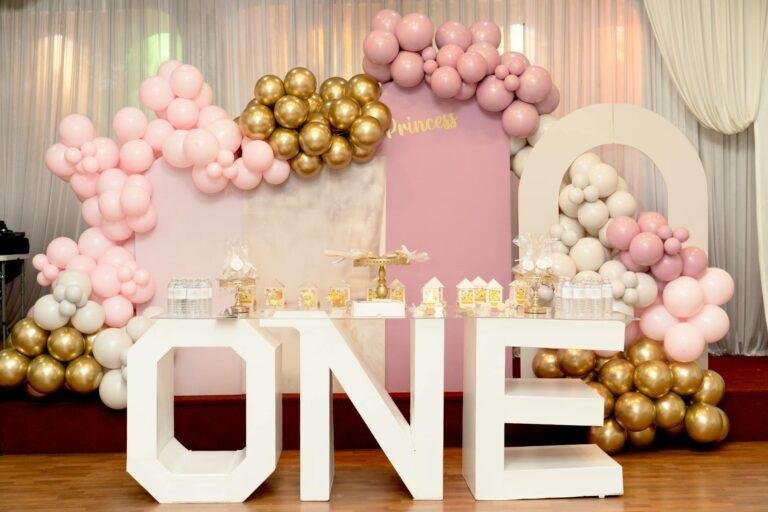
The versatility of jumbo number foil balloons is what makes them such a powerful tool in your decor arsenal. They are no longer just a standalone prop. The most impactful trend I’m seeing is the integration of these giant number balloons into layered, textured installations. For a sweet sixteen or quinceañera, imagine a massive “16” flanked by organic balloon garlands in complementary colors, with cascading ribbons and fresh flowers woven into the framework. The jumbo number foil balloon acts as the structural anchor, while the softer elements provide warmth and texture. For corporate milestones—a 10th anniversary party, for example—a pair of “1” and “0” balloons in corporate colors, paired with elegant greenery and uplighting, creates a sophisticated brand-centric installation. The scale commands attention in large banquet halls where smaller decor gets lost. Another growing application is the “floating cloud” effect, where the number is suspended above the cake table or gift table at varying heights using clear monofilament line, creating a dynamic, 3D focal point that photographs beautifully from all angles. I always advise decorators to think of the number as a piece of sculpture; you’re building an installation around it, not just plopping it on a stick.
Step-by-Step: Building a Milestone Birthday Backdrop
Let me walk you through a real setup for a first birthday, as it’s the most requested application. You’ll need your jumbo number foil balloon (the “1”), a sturdy backdrop frame (I recommend a 6×8 foot metal frame), garland tape, around 100-150 latex or microfoil balloons in your color palette, and a heavy-duty weight. First, inflate your jumbo number with air (not helium for this application) and attach it securely to the center of the frame using multiple zip ties through its reinforced hanging tab. Don’t rely on one point. Next, build your balloon garland on the garland tape off-site for efficiency. Weave in different sizes (5-inch, 11-inch, 16-inch) for depth. Transport the completed garland to the venue and attach it to the frame around the number, using the frame’s crossbars for support. The key is to cluster balloons more densely at the top and sides of the number to frame it, creating a cascading effect downwards. Finally, add accent elements like faux greenery, paper tassels, or even small LED lights within the garland. The entire install for a pro should take 2-3 hours. Always bring a backup balloon and a portable steamer—the steam can help smooth out any minor creases in the foil on-site, a trick that has saved my setup more than once.
Beyond Birthdays: Creative Uses for Jumbo Number Foil Balloons
While birthdays drive the market, limiting these products to that niche leaves money on the table. Wedding planners are now using them for table numbers in oversized, lavish receptions—a “3” on table three becomes a stunning guidepost. Graduation parties use the graduation year as a monumental photo prop. Retail stores use them for anniversary sales (“SALE 20” is far more impactful than a banner). One of the most profitable applications I’ve seen is in photo booths and experiential marketing events. A company launching a “Project X” might use a giant “X” balloon as the centerpiece of their activation. The durability means it can be used for multiple events. When you market these, don’t just show a birthday picture. Show a sleek corporate event, a vibrant gender reveal (using the giant number for weeks of pregnancy), or a New Year’s Eve party with a massive “2025”. This expands your client base from individual parents to event agencies, marketing firms, and venues themselves, who may want to purchase these as reusable assets for their own decor packages.
Jumbo vs. Traditional: A Side-by-Side Comparison
To understand the value proposition, you need a clear, factual comparison. This isn’t about saying small balloons are bad; it’s about showing clients why the investment in jumbo number foil balloons delivers a different league of impact. The most common alternative is a cluster of standard 18-inch foil number balloons or a cardboard/acrylic number prop. Let’s break down why the jumbo foil version has become the preferred choice for professionals who care about their reputation and their photos.
| Feature | Jumbo 40″ Foil Number Balloon | Cluster of Standard 18″ Foil Balloons | Cardboard/Acrylic Cutout |
|---|---|---|---|
| Visual Impact | Monolithic, clean, photogenic from any angle. Creates a defined focal point. | Busy, can look cluttered. Multiple seams and strings distract the eye. | Flat, 2D appearance. Can look cheap if not perfectly printed and lit. |
| Setup Time & Labor | ~15 minutes to inflate and secure. One piece to manage. | 30-45 minutes to inflate, tie, cluster, and arrange multiple balloons. | 5 minutes to unpack, but often requires assembly and always needs a stand or mounting hardware. |
| Client Perceived Value | High. Looks expensive and custom. Justifies premium pricing. | Low to Medium. Associated with retail party stores. | Medium. Can look DIY unless it’s high-end acrylic with internal lighting. |
| Durability & Reusability | High. Can be deflated, carefully folded, and reused 3-5 times for photo ops. | Very Low. Typically single-use, prone to popping. | Medium. Cardboard damages easily. Acrylic is reusable but bulky to store and transport. |
| Logistics & Transport | Deflated, it’s a flat pack. Easy to store and carry to venue. | Inflated, they are bulky and difficult to transport without damage. | Often large, rigid, and awkward. Requires a vehicle with significant space. |
| Cost to Source (Wholesale) | $8 – $18 per digit, depending on finish and quantity. | $1.50 – $3 per balloon, needing 5-7 for impact = $7.50 – $21 total. | $15 – $50+ for a quality custom cutout, plus shipping for rigid materials. |
The table reveals the core business logic. While the upfront unit cost of a jumbo number foil balloon might be similar to a cluster of smaller ones, the labor savings are enormous. Your time is your most valuable asset. Spending 15 minutes versus 45 minutes on a single prop means you can take on more events or create more elaborate setups within the same timeframe. Furthermore, the reusability factor is a hidden profit center. For a decorator, buying a quality “3” and “0” set means you can rent it out for 30th birthdays repeatedly, with minimal wear. The client perceives a giant, shimmering balloon as a high-value specialty item, allowing you to charge $75-$150 for its use in a package, whereas a cluster of small balloons might only command a $30 add-on fee. The math for building a profitable inventory becomes very clear when you analyze it through this lens.
The Market Shift: Why This Trend Is Exploding Now
The demand for jumbo number foil balloons didn’t emerge from a vacuum. It’s the convergence of three powerful forces: the visual demands of social media, the professionalization of the home-based event business, and advancements in global manufacturing and logistics. Five years ago, a birthday photo was a candid shot. Today, it’s a styled photoshoot for Instagram, and a small balloon cluster gets lost in the feed. The 40-inch scale is literally designed for the phone camera’s frame—it fills it perfectly with dramatic presence. Simultaneously, the rise of the “mompreneur” decorator and the Etsy seller has created a massive network of micro-businesses that need distinctive, photogenic products to differentiate themselves. They can’t compete with Party City on price, so they compete on scale and style, and jumbo number foil balloons are their flagship product. On the supply side, factories in manufacturing hubs like Yiwu, China, have perfected the laminate process and high-frequency welding, bringing the unit cost down to a point where wholesale is viable. A decade ago, a balloon this size and quality would have been a $50 custom order. Now, through efficient mass production and direct-to-business shipping, decorators can access them for a fraction of that, creating a perfect storm of accessibility and demand.
The Data Behind the Demand for Giant Number Balloons
Let’s talk numbers, because sentiment is one thing, but search volume and sales data don’t lie. According to platform analytics from Etsy and Amazon, searches for “giant number balloon” and “jumbo number foil balloons” have grown over 300% in the past two years. On Pinterest, saves for “birthday backdrop ideas” featuring these balloons are in the millions. But here’s the more telling data point for wholesalers: the average order volume from professional decorators has shifted. Three years ago, they’d order 10-20 pieces as a test. Now, I’m seeing consistent reorders of 50-100 pieces at a time, with specific requests for full number sets (0-9) in multiple colorways. This indicates that these are no longer experiment products; they are core, recurring inventory items for established businesses. The client demographic has also expanded. Initially, it was almost exclusively for first birthdays. Now, orders are evenly split between 1st birthdays, milestone adult birthdays (30, 40, 50), and weddings/anniversaries. This diversification makes the product category far more resilient to market fluctuations than a niche, single-use item.
What the Pros Know: The Social Media Amplification Loop
Here’s the insider knowledge that drives perpetual growth: jumbo number foil balloons create their own marketing. When a decorator creates a stunning install for a client, the client posts it on Instagram. Their friends, who are also potential clients, see it and ask, “Who did your balloons?” They tag the decorator. That decorator’s portfolio grows. Furthermore, the decorator tags the supplier (if they’re smart) or uses generic hashtags like #jumbonumberballoon. Other decorators see that work, research the product, and seek out a supplier. This creates a powerful, organic growth loop that paid advertising can’t buy. The product is inherently viral because it’s visually dominant and tied to emotionally charged, shareable moments (birthdays, weddings). As a wholesaler or a decorator stocking these, you’re not just selling a balloon; you’re selling a tool that helps your customers market themselves. That’s why the most successful suppliers provide high-quality stock photos and video clips—they’re arming their buyers with the content to fuel this loop. If you’re sourcing, choose a supplier who understands this dynamic and supports it with marketing assets, not just a product catalog.
Smart Wholesale Sourcing for Maximum Profit
Sourcing jumbo number foil balloons profitably requires a strategic approach that balances cost, quality, and reliability. The first decision is choosing between a trading company and a direct factory. For a new business or orders under 500 units, a reputable trading company like VastParty is often the smarter choice. They consolidate orders from multiple small buyers to meet the factory’s high Minimum Order Quantity (MOQ), which can be 1000+ pieces per design for a direct order. They also handle quality control, export documentation, and often stock popular items for faster shipping. The price per unit might be 10-20% higher than theoretical factory-direct pricing, but you avoid the massive capital commitment, the risk of quality inconsistency, and the headache of international logistics. When you’re ready to scale (consistently ordering 1000+ units of a single SKU), then negotiating directly with a factory becomes viable. Always, always request physical samples before placing a bulk order. Evaluate the sample for the seam welding, valve quality, material thickness, and color accuracy. Inflate it and leave it for a week to test float time. This $20 sample fee can save you from a $2000 mistake.
Understanding Pricing Tiers and MOQs for Jumbo Number Foil Balloons
Wholesale pricing is tiered and highly volume-sensitive. Here’s a realistic breakdown based on current market rates from Yiwu manufacturers for standard metallic finish jumbo number foil balloons:
- Tier 1 (Sample Order: 1-10 pcs): $12 – $18 per balloon. This is the “testing the waters” price.
- Tier 2 (Small Wholesale: 50-100 pcs): $9 – $13 per balloon. This is typical for a decorator building initial inventory.
- Tier 3 (Medium Wholesale: 200-500 pcs): $7 – $10 per balloon. This is for established businesses or regional distributors.
- Tier 4 (Large Wholesale / Factory Direct: 1000+ pcs): $5 – $8 per balloon. This requires significant capital and storage.
Special finishes like holographic, confetti-filled, or double-sided print add $1-$3 to the unit cost. MOQs are crucial. A trading company might offer an MOQ of 50 pieces across all numbers/colors, which is manageable. A factory will typically have an MOQ of 500-1000 pieces per SKU (e.g., 1000 pieces of just the number “1” in gold). Don’t get lured by the lowest per-unit price if the MOQ forces you to over-invest in a single digit that might not sell. Balance your inventory based on demand—you’ll sell more “1”s and “0”s than “7”s or “8”s.
Logistics and Lead Time: Planning Your Inventory
This is where new importers get tripped up. You’ve placed your order, now what? Standard production time for jumbo number foil balloons is 10-15 business days after sample approval and deposit. Shipping is the variable. By sea (LCL or FCL) is the most cost-effective for large orders, taking 30-45 days to major ports like Los Angeles or Long Beach. Then add 5-7 days for customs clearance and inland trucking. By air freight is faster (7-10 days) but can triple or quadruple the shipping cost, often making the per-unit price untenable. My strong recommendation for your first few orders is to use a supplier’s DDP (Delivered Duty Paid) service. This means they quote you a landed cost per unit to your door, including all shipping, duties, and taxes. It’s slightly more expensive but eliminates the terrifying surprise of a $500 customs bill or the complexity of arranging a freight forwarder. Plan your inventory purchases at least 90 days before you need the stock. For example, order in January for the spring/summer birthday season. This buffer accounts for production delays, Chinese New Year closures (usually in January/February), and shipping variability.
Your Target Buyer: Who’s Spending and Why
To sell effectively, you need to know exactly who is buying jumbo number foil balloons and what motivates their purchase. The market segments into four primary buyer profiles, each with distinct needs and purchasing patterns. First, the Event Decorator & Party Planner. This is your core B2B buyer. They purchase for specific client events and need reliability, consistency, and a professional finish. They are less price-sensitive but highly quality-sensitive. They buy in medium quantities (20-50 pieces per order) and value suppliers who offer bulk discounts, reliable shipping timelines, and excellent customer service for resolving issues. Second, the Etsy & Amazon FBA Seller. They are retailing directly to consumers. They need competitive wholesale pricing, attractive packaging for direct shipment, and a wide variety of designs (all numbers, multiple colors). They buy in larger quantities (100+ pieces) to maintain stock and benefit from lower price tiers. They are driven by margins and turnover rate. Third, the Balloon & Party Store Owner. They are stocking for walk-in retail customers. They need eye-catching display samples, pre-packaged retail units, and fast-moving numbers (1, 2, 3, 0, 1st). They often want smaller MOQs to test a variety of products. Fourth, the Corporate & Venue Buyer. This includes hotels, event spaces, and corporate marketing departments. They purchase for reusable decor or specific campaigns. They need durability, custom branding options (like printing a logo on the balloon), and professional documentation (safety certs). They have larger budgets but longer sales cycles.
Psychographics: What Each Buyer Really Cares About
Beyond their business type, understanding their emotional drivers closes sales. The Event Decorator is buying peace of mind. They need to know the balloon won’t deflate mid-event and ruin their reputation. Your marketing should emphasize quality control, float time guarantees, and the robustness of the seams. The Etsy Seller is buying profit potential and trendiness. They want to know this is the hot item that will fly off their virtual shelves. Provide them with trending color reports (e.g., “Terracotta and Sage Green are up 200% this quarter”) and high-resolution lifestyle photos they can use in their listings. The Party Store Owner is buying foot traffic and impulse purchases. They need to see how a giant, inflated sample in their window will draw people in. Offer them a discounted display sample program. The Corporate Buyer is buying brand elevation and a “wow” factor. They respond to case studies showing how other brands used jumbo number foil balloons for successful launches or events. Tailor your communication to these core desires, and you’ll convert browsers into loyal, repeat buyers.
Marketing Magic: Selling the Experience, Not Just the Product
You cannot market jumbo number foil balloons by listing dimensions and prices. You must sell the memory, the photo, the feeling of grandeur. Your product descriptions and imagery should transport the buyer to the moment of celebration. Instead of “40-inch gold foil number one,” try “Create a Monumental First Birthday Moment: Our 40-inch Golden ‘1’ Balloon transforms your party space into a stunning photo studio, ensuring your little one’s milestone is captured in breathtaking style.” Use verbs that evoke action and outcome: “Dominate your venue,” “Anchor your décor,” “Command attention.” Your photography is non-negotiable. You need professional shots in real event settings—a beautifully styled cake table with the balloon, a child gazing up at it, a couple kissing in front of giant anniversary numbers. Video is even more powerful: a slow-motion clip of the balloon being inflated, catching the light, or a time-lapse of it being incorporated into a full backdrop installation. This content demonstrates the product’s scale and application better than any spec sheet.
Effective Language and Unique Selling Propositions
To stand out in a crowded market, you need a sharp Unique Selling Proposition (USP). This isn’t just “we have balloons.” It’s a specific benefit tied to your business model. For VastParty, our USPs are built on being a professional B2B manufacturer: “Professional-Grade Laminate for 7-Day Float Time,” “Reinforced Welded Seams You Can Trust,” “Direct Factory Pricing with Trading Company Flexibility.” Use these in your headlines and bullet points. In your descriptions, address common objections preemptively. “Worried about creases? Our advanced material memory ensures a smooth, photogenic surface after inflation.” “Concerned about setup? The integrated self-sealing valve allows for quick, one-person inflation.” This shows you understand the buyer’s pain points. Also, leverage social proof. Feature testimonials from decorators: “I’ve used these for 20+ first birthdays without a single leak or client complaint.” This builds the trust that is essential for converting a first-time buyer.
Building a Portfolio That Attracts High-End Clients
Your portfolio is your strongest sales tool. Don’t just post pictures of balloons on a blank wall. Create styled vignettes that tell a story. Build a “Milestone Series”: a 1st birthday setup, a 16th birthday, a 50th anniversary. For each, list the other components used (e.g., “paired with our ivory organic garland kit and rose gold confetti balloons”) to encourage larger basket sales. Offer “Pro Tips” captions that add value: “For this setup, we used a 6-foot frame and clustered greenery at the base to ground the number.” This positions you as an expert, not just a vendor. If you’re a wholesaler, provide these portfolio images and tips to your buyers so they can market effectively to their end clients. By becoming a source of both products and inspiration, you embed yourself into the creative process, making your business indispensable.
Frequently Asked Questions About Jumbo Number Foil Balloons
Q: How much helium do I need to float a 40-inch jumbo number foil balloon?
A: You need a significant amount—approximately 250-300 cubic feet of pure helium for a single 40-inch balloon to achieve proper buoyancy. A standard disposable “tank” from a retail store holds about 14 cubic feet, which is completely insufficient. Professionals use large, rented J-tanks or K-tanks from industrial gas suppliers. For most event setups, especially backdrops, I recommend inflating them with air and mounting them on a frame. It’s more stable, cost-effective, and you avoid the logistics and expense of helium altogether.
Q: Can jumbo number foil balloons be reused?
A> Absolutely, and this is a major selling point for decorators. A high-quality balloon can be carefully deflated by gently pressing on the valve to release air (never use sharp objects), folded along its original creases, and stored flat. We’ve seen professionals reuse the same balloon 5-8 times for photo backdrops before any noticeable wear appears. The key is gentle handling during deflation and storage—avoid sharp folds, extreme heat, and moisture. Always inspect the seams and valve before re-inflating for a client event.
Q: How long do they take to inflate?
A> With a standard electric balloon pump, a single person can inflate a 40-inch jumbo number foil balloon with air in about 3-5 minutes. The integrated self-sealing valve makes this process quick. If you’re using helium, it takes a similar amount of time to fill, but the setup of the helium tank and regulator adds extra minutes. For a full event setup with multiple large balloons, always factor in inflation time in your project plan. Inflating 10 giant numbers can take 30-45 minutes of focused work.
Q: What’s the difference between a $8 wholesale balloon and a $18 one?
A> The price difference comes down to material quality, manufacturing consistency, and safety certifications. The $8 balloon likely uses a thinner, 2-ply laminate with glued seams, has a basic valve, and may not have passed rigorous safety tests for heavy metals. It might crease badly and have a float time of 1-2 days. The $18 balloon uses a 3-ply reinforced material, high-frequency welded seams, a reliable self-sealing valve, and comes with full compliance documentation. It will look smoother, last longer, and protect your business from liability. For professional use, the higher initial investment always pays off.
Q: Can I get custom colors or prints on jumbo number foil balloons?
A> Yes, but there are minimum order quantities. For standard color changes (e.g., a specific Pantone shade), most factories require an MOQ of 500-1000 pieces per number. For fully custom prints (like a floral pattern or corporate logo printed across the number), the MOQ is higher, often 2000+ pieces, and involves screen setup fees. For most decorators and small wholesalers, it’s more practical to choose from a supplier’s existing palette of popular colors (metallic gold, rose gold, silver, black, white) which are stocked and have lower MOQs. Always request a physical color swatch before ordering a custom color, as on-screen RGB values can look very different on metallic foil.
Q: How should I store and transport these balloons?
A> Store them deflated, laid flat in a cool, dry, and dark place. Avoid attics, garages, or cars where temperature fluctuations can damage the material. Do not stack heavy items on top of them. For transport to an event, keep them in their original flat packaging or in a large portfolio case. Inflate them on-site whenever possible. If you must transport them inflated, use a vehicle where they can lie flat without being crushed, and be mindful that they act like sails—even a gentle breeze can make them difficult to manage outside of a vehicle.
Q: Are they safe for indoor and outdoor use?
A> They are safe for both, but with important caveats. Indoors, they are perfectly safe away from sharp objects and direct heat sources like heaters or fireplaces. Outdoors, you must secure them aggressively. Use heavy-duty weights (3+ lbs) and consider tethering the string to a sturdy object like a fence post or heavy plant stand. Even a light wind can generate surprising lift. Avoid using them outdoors in forecasted rain or strong winds above 10 mph. The foil material itself is waterproof, but the conditions that accompany rain (wind, potential for falling branches) pose a risk to the installation.
The journey from seeing a trend on Pinterest to having a reliable, profitable supply of jumbo number foil balloons in your inventory is filled with specific decisions. It’s about choosing the right supplier who understands the difference between a novelty