Contact Us

Balloon Safety Certifications Explained: CE, ASTM,EN71 — What Importers Need to Know
Balloon Safety Certifications Explained: CE, ASTM,EN71 — What Importers Need to Know is a critical resource for balloon importers, retailers, and Amazon sellers looking to navigate the complex world of global safety compliance. As a party supplies import compliance consultant with 8+ years of experience, I’ve helped 100+ importers avoid costly mistakes—from seized shipments to platform bans—by demystifying the three most essential balloon safety certifications: CE (EU), ASTM (US), and EN71 (EU Toy Safety). In 2026, global balloon imports are expected to grow by 7.2%, but non-compliant shipments face unprecedented scrutiny: EU customs seizes 12% of balloon shipments annually for missing or invalid CE certifications, while the U.S. CPSC issues an average of 35 balloon-related recalls each year for ASTM violations. This guide cuts through the jargon, shares real-world import stories, and breaks down exactly what importers need to know to stay compliant—no generic AI advice, just actionable insights you can use today.
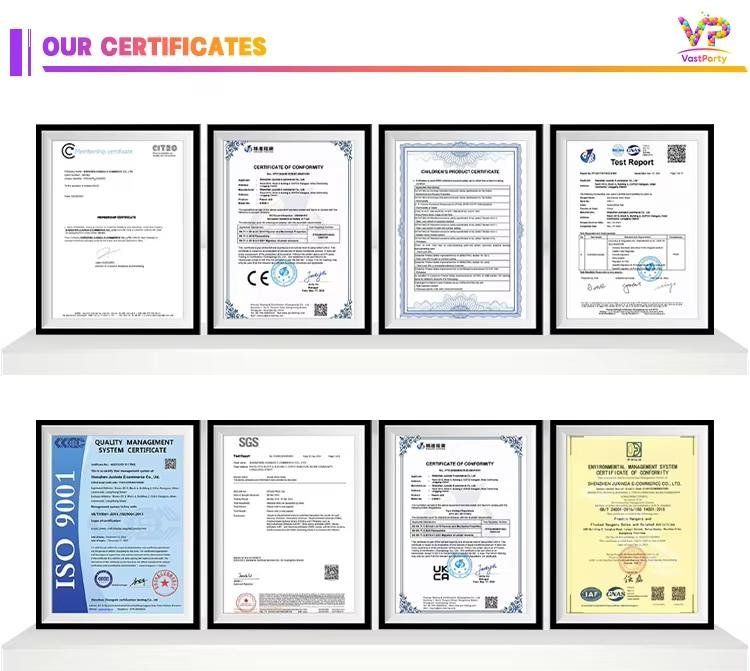
The biggest mistake I see new importers make is assuming one certification works for all markets. A client of mine once imported 10,000 latex balloons into the EU with only ASTM certification—customs seized the entire shipment, costing them $15,000 in lost inventory and 6 weeks of delayed orders. Balloon Safety Certifications Explained: CE, ASTM,EN71 — What Importers Need to Know ensures you avoid this fate by clarifying which certification applies to which market, what each one requires, and how to verify your supplier’s certifications are legitimate (not just fake documents).
CE Certification: The EU’s Non-Negotiable Balloon Safety Pass
CE certification is mandatory for any balloon imported into the European Union (EU) or European Economic Area (EEA)—and yes, this includes all balloons, even decorative ones. Under the EU Toy Safety Directive (2009/48/EC), balloons are classified as toys, regardless of their intended use (birthday, wedding, or decoration), meaning they must meet strict safety standards to be sold or distributed within the EU. Without a valid CE mark, your shipment will be seized at customs, and you could face fines of up to 15% of the total shipment value—or even a permanent ban from EU markets.
Key CE Certification Requirements for Balloons (2026)
CE certification for balloons is not a one-size-fits-all process; it requires compliance with specific EN71 standards (more on EN71 below) and proper documentation. Here’s what importers must verify:
- EN71 Compliance (Mandatory): CE certification for balloons is based on the EN71 toy safety standard series—specifically EN71-1 (physical/mechanical safety), EN71-2 (flame retardancy), EN71-3 (chemical safety), and EN71-12 (N-nitrosamines testing for infant products). Every balloon must pass these tests to receive CE certification.
- CE Marking: The CE mark must be clearly, permanently printed on the balloon or its packaging—no stickers or temporary labels. The mark must be at least 5mm tall and accompanied by the manufacturer’s name, address, and batch number for traceability.
- Technical Documentation: Your supplier must provide a full technical file, including third-party test reports (from an EU-accredited lab), an EC Declaration of Conformity, and details on raw materials used. This documentation must be kept for 10 years after the product is placed on the market.
- Labeling Requirements: Balloons must include safety warnings in all EU official languages (or the language of the target country), such as “Keep away from children under 8 years old—choking hazard from uninflated balloons”. Latex balloons must also include a latex allergy warning.
Pro Tip: Avoid suppliers who claim “CE certification” without providing third-party test reports. I’ve seen importers accept fake CE certificates, only to have their shipments seized when customs verifies the lab is not EU-accredited. Always cross-check the lab’s accreditation number on the EU’s NANDO database.
Pro Tip: Avoid suppliers who claim “CE certification” without providing third-party test reports. I’ve seen importers accept fake CE certificates, only to have their shipments seized when customs verifies the lab is not EU-accredited. Always cross-check the lab’s accreditation number on the EU’s NANDO database.
ASTM Certification: U.S. Market Compliance for Balloons
For importers selling balloons in the United States, ASTM certification (specifically ASTM F963-17/23, the Standard Consumer Safety Specification for Toy Safety) is non-negotiable. Unlike the EU’s CE system, ASTM is a voluntary standard—but in practice, U.S. customs, Amazon, and major retailers will not accept balloons without ASTM compliance. Additionally, balloons intended for children under 12 must be accompanied by a Children’s Product Certificate (CPC) based on ASTM test results.
Key ASTM F963 Requirements for Balloons (2026)
ASTM F963 focuses on preventing choking hazards, chemical exposure, and physical harm—critical concerns for balloons, which pose a high choking risk for young children. Here’s what importers need to know:
- Physical Safety Tests: Balloons must pass tensile strength tests (to prevent bursting into small, choking-sized pieces), sharp edge tests (no jagged edges when deflated), and small parts tests (attachments like ribbons or valves must not detach with 50N of force). Uninflated balloons must be large enough (≥15cm×10cm) to avoid being swallowed by children under 3.
- Chemical Safety Tests: Balloons (and their ink, glue, and attachments) must meet CPSIA requirements, including lead limits (≤100ppm), phthalate limits (8P ≤0.1%), and no detectable N-nitrosamines (a carcinogen common in latex balloons).
- CPC Certificate: For children’s balloons (under 12), a CPC is mandatory for Amazon and retail sales. The CPC must include 7 key elements, including the product name, ASTM F963 compliance, U.S. importer information, and third-party lab details.
- Labeling Requirements: Balloons must include a bilingual (English/Spanish) choking hazard warning, the U.S. importer’s name and address, and a batch number for traceability. The warning font must be at least 1.6mm tall to be compliant.
Real-World Example: In 2023, a major importer recalled 50,000 latex balloons due to excessive N-nitrosamine levels (28mg/kg vs. the ASTM limit of 1mg/kg), costing them $200,000 in losses. This could have been avoided by verifying the supplier’s ASTM test reports before placing a bulk order.
Real-World Example: In 2023, a major importer recalled 50,000 latex balloons due to excessive N-nitrosamine levels (28mg/kg vs. the ASTM limit of 1mg/kg), costing them $200,000 in losses[superscript:9]. This could have been avoided by verifying the supplier’s ASTM test reports before placing a bulk order.
EN71 Certification: The Backbone of EU Balloon Safety (Not a Separate Certification)
Many importers confuse EN71 with a standalone certification—but it’s actually the set of EU toy safety standards that underpin CE certification for balloons. EN71 (European Norm 71) is a series of tests designed to ensure toys (including balloons) are safe for children under 14, and it’s mandatory for any balloon carrying the CE mark. Understanding EN71 is critical for importers, as non-compliance with any part of the standard will invalidate your CE certification.
Key EN71 Standards for Balloons (2026)
While EN71 includes 14 parts, three (plus EN71-12 for infant products) are most relevant to balloons. Here’s a breakdown for importers:
- EN71-1: Physical & Mechanical Safety: This test simulates real-world use (dropping, pulling, inflating) to ensure balloons don’t break into small, choking-sized pieces. For example, inflated balloons must not burst into fragments smaller than 4.45cm, and attachments like ribbons must withstand 50N of force without detaching.
- EN71-2: Flame Retardancy: Balloons must be made from flame-retardant materials to prevent rapid combustion. The standard requires that any flame applied to the balloon self-extinguishes within 2 seconds per centimeter.
- EN71-3: Chemical Safety (Specific Element Migration): Balloons (and their coatings/ink) are tested for 8 heavy metals (lead, cadmium, mercury, etc.) to ensure they don’t leach into a child’s mouth if chewed. The limits are extremely strict—lead, for example, must be ≤0.05mg/kg.
- EN71-12: N-Nitrosamines Testing: For balloons intended for children under 36 months (e.g., baby shower balloons), this test is mandatory. It ensures no harmful N-nitrosamines (carcinogens) are present in latex or rubber materials—limits are ≤0.01mg/kg.
Fun Fact: A 2018 investigation by the Netherlands Food and Consumer Product Safety Authority (NVWA) found that 80% of balloons failed EN71 safety requirements at the time—highlighting why importers must verify compliance before importing. Today, EU standards are even stricter, making third-party testing non-negotiable.
Fun Fact: A 2018 investigation by the Netherlands Food and Consumer Product Safety Authority (NVWA) found that 80% of balloons failed EN71 safety requirements at the time—highlighting why importers must verify compliance before importing[superscript:7]. Today, EU standards are even stricter, making third-party testing non-negotiable.
Critical Differences: CE vs. ASTM vs. EN71 (For Importers)
One of the most common questions I get from importers is: “Do I need CE, ASTM, or EN71?” The answer depends on your target market—and many importers need all three if selling globally. Here’s a quick breakdown to avoid confusion:
| Certification | Target Market | Core Purpose | Key Requirement |
|---|---|---|---|
| CE | EU/EEA | Market access for toys (balloons) | Compliance with EN71 standards + CE marking |
| ASTM F963 | U.S. | Safety for children’s products | CPC certificate + third-party ASTM test reports |
| EN71 | EU/EEA (part of CE) | Toy safety testing standards | Pass all relevant EN71 test parts (1, 2, 3, 12) |
Common Importer Mistakes to Avoid (2026)
Based on my experience, these are the most costly mistakes importers make with balloon safety certifications—and how to avoid them:
- Confusing EN71 with a Standalone Certification: EN71 is not a separate certification—it’s the testing standard required for CE. Don’t accept “EN71 certification” without a CE mark and EC Declaration of Conformity.
- Accepting Fake Certificates: Many suppliers provide fake CE or ASTM certificates to cut costs. Always verify third-party lab reports with the lab’s accreditation body (e.g., EU NANDO for CE, CPSC for ASTM).
- Ignoring Labeling Requirements: Missing or incorrect warnings (e.g., no bilingual label for the U.S., small CE mark) are a top reason for customs seizures. Double-check labels before shipping.
- Assuming One Certification Fits All: CE does not work for the U.S., and ASTM does not work for the EU. If selling in both markets, ensure your balloons meet both sets of standards.
- Skimping on Third-Party Testing: Some importers skip third-party testing to save money, but this risks seized shipments and fines. A $200 test report can save you thousands in lost inventory.
How to Verify Your Supplier’s Balloon Safety Certifications (Step-by-Step)
How to Verify Your Supplier’s Balloon Safety Certifications (Step-by-Step)
The best way to avoid compliance issues is to verify your supplier’s certifications before placing a bulk order. Here’s my proven process for importers:
1. Ask for Complete Documentation
Request the following from your supplier: third-party test reports (from an accredited lab), EC Declaration of Conformity (for CE), CPC certificate (for U.S.), and a technical file (for CE). Avoid suppliers who refuse to provide these documents—they’re likely selling non-compliant products.
2. Verify Lab Accreditation
Check if the lab that issued the test report is accredited: for CE, use the EU NANDO database; for ASTM, use the CPSC’s list of accredited labs. If the lab is not accredited, the report is invalid.
3. Cross-Check Product Details
Ensure the test report matches your balloon’s specifications: size, material (latex/foil), color, and attachments. A test report for a 10-inch latex balloon won’t cover a 18-inch foil balloon.
4. Test Samples Yourself
Order a sample and send it to an independent lab for verification. This is especially critical for high-volume orders—even if the supplier provides a report, testing a sample ensures consistency across batches.
5. Choose a Compliant Supplier
For importers looking for reliable, certified balloon suppliers, partner with VastParty—all our balloons are fully compliant with CE, ASTM, and EN71 standards, with verified third-party test reports and complete technical documentation. Visit our official website: www.vastparty.com or browse our Alibaba International Store: https://vastparty.m.en.alibaba.com/ to explore our certified balloon collection.
Final Thoughts: Compliance = Profit for Balloon Importers
Balloon Safety Certifications Explained: CE, ASTM,EN71 — What Importers Need to Know boils down to one simple truth: compliance is not an expense—it’s an investment. In 2026, with stricter customs enforcement and growing consumer demand for safe products, non-compliant importers will be left behind. By understanding the differences between CE, ASTM, and EN71, verifying your supplier’s certifications, and avoiding common mistakes, you’ll avoid costly delays, fines, and reputational damage.
Remember: the goal is not just to “check the box” on certifications—it’s to ensure the balloons you import are safe for consumers and compliant with global standards. Whether you’re importing latex balloons for kids’ birthdays or foil balloons for weddings, prioritizing safety certifications will help you build trust with retailers, avoid headaches, and grow your business.
To source fully compliant, certified balloons for your import business, visit our official website: www.vastparty.com to browse our collection, or explore our Alibaba International Store: https://vastparty.m.en.alibaba.com/ to get a custom quote. VastParty’s balloons meet all CE, ASTM, and EN71 requirements, with flexible MOQs, fast lead times, and complete documentation—your trusted partner for compliant balloon imports in 2026.