Contact Us

CE, ASTM, EN71: Which Safety Certifications Do Your Balloons Need?
CE, ASTM, EN71: Which Safety Certifications Do Your Balloons Need? This question is critical for party supply manufacturers, retailers, and event planners who want to ensure their balloon products meet global safety standards and protect consumers, especially children, from potential hazards. Balloons are popular party decorations, but they also pose choking, suffocation, and chemical exposure risks if not properly tested and certified. In this comprehensive guide, we’ll break down the three most important safety certifications for balloons and explain how to ensure compliance for your products.
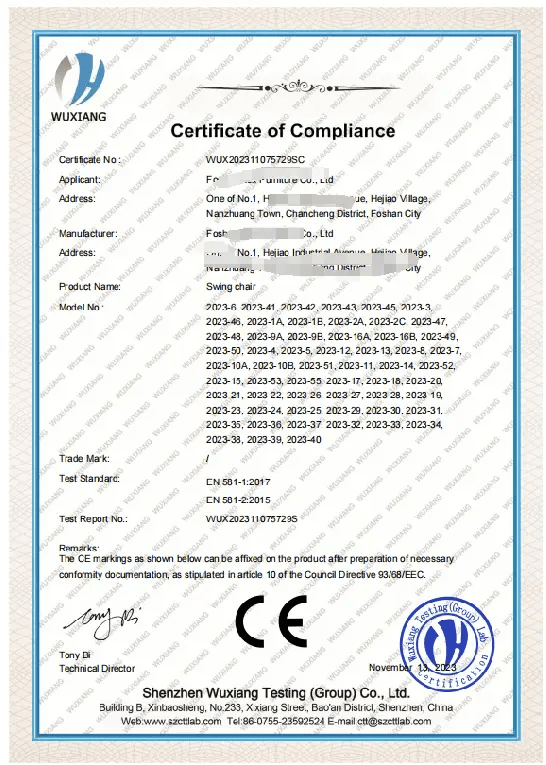
Understanding Balloon Safety Risks
Before diving into specific certifications, it’s essential to recognize why balloon safety standards matter. Balloons present unique hazards that require specialized testing:
- Choking and Suffocation: Uninflated or broken balloons are a major choking risk for children under 8 years old. The Consumer Products Safety Commission found that nearly a third of child choking deaths related to children’s products between 1972 and 1992 involved latex balloons.
- Chemical Exposure: Balloons (especially latex) can contain harmful substances like nitrosamines, which are carcinogenic. These substances can leach into children’s mouths when balloons are placed there.
- Flammability: Foil and latex balloons can pose fire risks if they come into contact with heat sources or electrical lines.
- Physical Hazards: Poorly constructed balloons may burst unexpectedly, causing eye injuries or惊吓, while small parts (like valve components) can become choking hazards.
CE Marking: The European Market Access Requirement
CE marking is mandatory for all balloons sold in the European Union (EU) and European Economic Area (EEA). It indicates that a product complies with the EU Toy Safety Directive (2009/48/EC) and meets the essential safety requirements for toys, including balloons.
Key CE Requirements for Balloons:
- Compliance with EN71 Standards: CE marking for balloons requires adherence to the EN71 series of European toy safety standards (see detailed section below).
- Labeling Requirements:
- Clear warning statements: “Children under 8 years can choke or suffocate on uninflated or broken balloons”
- Age recommendation: “Not suitable for children under 36 months” (if applicable)
- Material composition (e.g., “Natural rubber latex”)
- Manufacturer/importer information
- Documentation: Manufacturers must maintain a Technical File demonstrating compliance with all relevant standards, including test reports from accredited laboratories.
EN71: The European Toy Safety Standard for Balloons
EN71 (European Standard for Toy Safety) is a comprehensive set of technical specifications developed by the European Committee for Standardization (CEN) specifically for toys, including balloons. For balloon manufacturers, the most critical parts of EN71 are:
EN71-1: Mechanical and Physical Properties
This section addresses choking hazards, small parts, and physical durability:
- Small Parts Test: Balloons and components must not fit through a small parts cylinder (choking hazard tube) when tested under abuse conditions (torque, tension, drop tests)
- Inflation Requirements: Balloons must withstand specified inflation pressures without bursting unexpectedly
- Warning Labeling: Mandatory warnings for children under 8 years regarding uninflated/broken balloons
Tests for flammability to prevent fire hazards:
- Prohibits highly flammable materials and cellulose nitrate
- Requires materials to meet specific flammability performance criteria
EN71-3: Migration of Certain Elements
Limits heavy metal content (lead, mercury, cadmium, etc.) to protect against chemical exposure:
- Strict limits on 19 elements commonly found in toys
- Testing involves simulating saliva and gastric fluids to measure element migration
EN71-12: N-Nitrosamines and N-Nitrosatable Substances
Critical for latex balloons:
- Limits total nitrosamines to 0.05 mg/kg
- Limits nitrosatable substances to 1.0 mg/kg
- Applies to elastomer toys (like balloons) intended for children under 36 months or to be placed in the mouth
ASTM F963: The American Safety Standard for Balloons
ASTM F963 is the voluntary consensus standard developed by the American Society for Testing and Materials (ASTM) that has become mandatory in the United States under federal law (CPSC regulations). For balloons, key requirements include:
- Choking Hazards: Similar to EN71-1, but with specific U.S. requirements for warning labels
- Mandatory warning: “Children under 8 years can choke or suffocate on uninflated or broken balloons. Adult supervision required. Keep uninflated balloons from children. Discard broken balloons at once.”
- Material Safety: Limits on heavy metals, phthalates, and other harmful substances (aligned with CPSIA requirements)
- Flammability: Balloons must meet specific flammability standards to reduce fire risks
- Labeling: Clear, permanent labeling in English with all required warnings and information
Which Certifications Do Your Balloons Need? A Market-by-Market Guide
| Market | Mandatory Certification | Additional Recommendations | Key Compliance Tips |
| European Union | CE Marking (with EN71 compliance) | EN71-12 for latex balloons | Ensure warning labels meet EN71-1 requirements; test for nitrosamines in latex products |
| United States | ASTM F963 (CPSC-enforced) | CPSIA lead/phthalate compliance | Use the exact CPSC-mandated warning text; maintain test records for 5 years |
| Canada | CCPSA (Consumer Chemicals and Containers Regulations) | ASTM F963 alignment | Include bilingual (English/French) labeling |
| Australia/New Zealand | AS/NZS ISO 8124 | EN71 or ASTM F963 compliance | Follow strict age labeling requirements |
| Global Export | CE + ASTM F963 | EN71-12, REACH compliance | Adopt a “global standard” approach to minimize multiple certifications |
How to Ensure Your Balloons Meet CE, ASTM, and EN71 Requirements
- Choose Quality Materials:
- Use heavy-duty, food-safe paper for paper balloons
- Select natural rubber latex that meets EN71-12 nitrosamine limits
- Avoid low-quality foil materials that tear easily
- Partner with Accredited Testing Laboratories:
- Ensure your testing facility is accredited to ISO 17025
- Request test reports for all critical components (latex, ink, adhesives)
- Test finished products, not just raw materials
- Implement Strict Quality Control:
- Regularly audit production processes to maintain consistency
- Conduct in-house pre-testing before final certification
- Train staff on safety requirements and labeling standards
- Update Labeling and Packaging:
- Use permanent, legible printing for all required warnings
- Ensure labels remain intact through normal handling
- Include multilingual warnings for global markets
Conclusion: Balloon Safety Certifications are Non-Negotiable
CE, ASTM, EN71: Which Safety Certifications Do Your Balloons Need? The answer is clear: if you’re selling balloons in the EU, you need CE marking with EN71 compliance; for the U.S., ASTM F963 is mandatory; and for global distribution, a combination of these standards is essential. By prioritizing safety certifications, you not only comply with legal requirements but also build trust with customers, differentiate your products in a competitive market, and most importantly, protect children from preventable hazards.
Remember: safety certifications are not just “red tape”—they are a critical investment in your brand’s reputation and the well-being of your customers. Whether you’re a manufacturer of foil balloons, latex balloons, or party balloon sets, ensuring compliance with CE, ASTM, and EN71 should be a top priority.
Additional Resources for Balloon Safety Compliance
- CPSC Balloon Safety Guidelines: https://www.cpsc.gov/Business–Manufacturing/Business-Education/Toy-Safety
- EN71-12 Standard for Elastomer Toys: https://ce-marking.help/directive/toy-safety/standard/4637/en-71-122016
- European Toy Safety Directive (2009/48/EC): https://eur-lex.europa.eu/legal-content/EN/TXT/PDF/?uri=CELEX:32009L0048
- ASTM F963 Standard: https://www.astm.org/Standards/F963.htm
By following these guidelines and investing in proper certification, you can ensure your balloons are safe, compliant, and ready for global markets.
Would you like me to convert this into a concise, actionable checklist (e.g., CE/ASTM/EN71 compliance steps, required tests, labeling templates) that you can use for your products?